

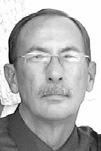
Keith Miller is a source I frequently read for inspiration. He exuded a wonderful faith in his spiritual books. In A Second Touch, he shared a childhood memory of one of his playmates. According to Keith, his mother “made me play” with hardheaded Henry.
Keit h l iked to play “explorer along the Amazon in search of gold.” Henry’s father owned the small, neighborhood grocery store. Naturally, Henry liked to play “store.” There was a small creek behind their homes and one day they discovered an old, seven-foot slide that had been discarded by the creek. Keith decided it would make a perfect dugout canoe for paddling the Amazon.
They sat down on the slide and Keith said that Henry needed to paddle while he shot at the cannibals who were lining the shore waiting to attack. After a few minutes, Keith shouted to Henry, “Paddle like mad, the cannibals are shooting arrows at us!” While Keith was pretending to shoot at the cannibals, he heard Henry’s quiet voice from the back of the slide-canoe. When he looked around, Henry Jones was selling groceries to old ladies out of the back of the dugout. Henry was selling merchandise: Keith was leading an expedition.
Keith employed the story of his childhood as an illustration of fruitful Christianity. He wrote that if we are to have an influence for Christ in this world, we will have to do more than peddle the religious merchandise of jewelry, devotional books and superfluous programs: We will have to live our faith as if it were an adventure. That is what God intended life-in-Christ to be.
In 1989, Robin Williams was nominated for an Oscar for his acting in the film The Dead Poet’s Society. Williams played John Keating, a preparatory schoolteacher whose unorthodox teaching methods challenge his students to pursue their dreams. In an emotional opening scene, he points to a photograph of former students, now long dead, and whispers what he believes their words would be to these current students: “Carpe diem. Seize the day. Make your lives extraordinary!”
Many of you will remember from Sunday School or a minister’s sermon the call of Abram. Abram, later known as Abraham, was the first patriarch of Israel. His call by God is found in the twelfth chapter of Genesis: “Now the LORD said to Abram, Go from your country and your kindred and your father’s house to the land that I will show you.” As often as this text is preached, the message usually focuses on what was surely Abram’s faith versus his insecurity of traveling to a land he had never known.
On the other hand, this could have been the day that Abram had dreamed of. Finally, he gets to leave the dominance of his father, Terah; he gets to be his own man. He will at last see some place other than his hometown. Abram will travel and see new sights. He will be on an adventure; it will be extraordinary! When God commissioned Paul to be His apostle to the Gentiles, what an expedition it became, from fleeing a town by basket, to standing before kings, to storms at sea, to seeing Rome, and, according to the historians Crysostom and Jerome, reaching Spain. Extraordinary.
It’s possible to be content with a narrow but useful life. All good things are God’s gift. But to dare to love, to be brave enough to sacrifice, to stand for good despite all opposition, to believe in miracles, to experience the invisible: this is extraordinary. Sure we can be happy selling groceries, but, wow, paddling the Amazon….
- Log in or Subscribe to post comments.