


OUTLAW INLAW
Cell phones are the single best and worst invention in my lifetime.
When I’m trying to research a story or call a source or when I’m trying to find my family at the store, I often wonder how I survived without this little gadget for the first 25 years of my life.
For my youngest son, his cell phone is an appendage. He is part of the generation of teenagers who have spent their entire adolescence in the age of the smartphone.
He and I go round-and-round about the hours he spends glued to the tiny screen. I take it away from him when I want him to get his homework done, clean his room or talk to me.
I often wonder if I’m being a good parent by allowing him so much time on his phone, and, if I’m honest, sometimes it’s easier to let him stay on that phone.
I do wonder if there is correlation between cell phone use and the high levels of anxiety, depression and suicide in our youth today, especially after reading so many studies that are finding links between the two.
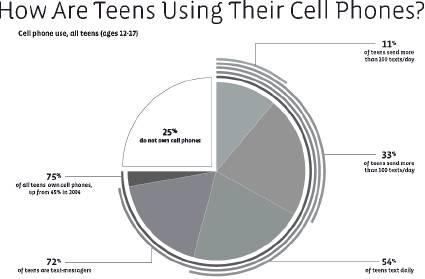
Here’s what we do know. In 2011, 75 percent of teens owned cell phones and 33 percent of those teens sent more than 100 text messages per day and 11 percent sent 200, according to Pew Internet Research Center.
Teenagers’ sleep is consistently interrupted by cell phones, according to Science Daily. Teen depression and suicide rates have skyrocketed since 2011.
Traffic accidents are the leading cause of deaths for American teens, and distracted drivers ages 15-19 comprise nine percent of those fatalities in 2015, according to the National Highway Traffic Safety Administration.
This is why I’m celebrating what one high school in the Round Rock Independent School District has done to help teenagers become more successful and productive students.
Administrators and teachers decided that students must turn over their phones before they enter the classroom, according to KXAN reporting.
Assistant Principal Jerrod Gertsema of Success High School told KXAN the results have been drastic. In-class productivity spiked 50 percent and students are communicating with each other and the teacher, which means deeper connections and conversations.
That is enough of a reason for me to get on the putting cell phones away before entering class bandwagon.
The cell phone policy for students at Rockdale ISD, “… permits students to possess personal mobile telephones; however, these devices must remain turned off during the instructional day, including during all testing, unless they are being used for approved instructional purposes.”
RISD teachers I spoke with said most of the time cell phones are a distraction but they can be handy in the classroom. Some support a ban on cell phones, while others welcome the technology in the classroom.
When I stop to consider all the bells and whistles on a cell phone, like cameras video and sound recording, I realize that students are holding a film production studio in the palm of their hands and have an avenue to publish what they create on social media public forums, with a potential to reach millions.
Even I have a hard time not using something that powerful. But I have years of training and experience posting things publicly for an audience.
I wonder if we should give that much responsibility to individuals whose brains aren’t fully developed until the age 25?
This is why, more-and-more, I like the idea of what one Round Rock ISD campus has done to get rid of the problems of cell phones.
As an educator for the past 10 years, I began each semester with a ban on cell phones. I kicked students out of my classroom, whom I caught using their smart-phones.
Many of my colleagues did not agree with my methods, but I can say that we had much better class discussions without cell phones.
I do understand what teachers have had to put up with from our children and their cell phone usage.
For instance, right here in Rockdale in the distant past, a RISD student called in a threat from a cellphone the person had found.
After all the protocols were followed, RISD contacted law enforcement and it was decided that the threat was not serious; however, officials wanted to find the student who made the false claims.
They searched for the person room-by-room. As they searched, students in the classrooms contacted each other through their smart-phones and knew where officials were as they searched. This made it more difficult to find the culprit.
On the other side of the equation, student cell phone usage has often helped keep others safe during school shootings. Smartphones are making an indelible mark in our society, but I can’t decide if I like it.
While my son usually has good arguments as to why he needs to hold on to his phone, to study, set an alarm, use the calculator, etc., I think we will continue to clash about it at home.
If you’d like to let me know how you handle your teenager and cell phone use feel free to email me.
- Log in or Subscribe to post comments.