

2020 BLACK HISTORY SERIES: PART II
Editor’s note: Susie Sansom Piper, who died last October at age 98, authored Black History Series for The Reporter over a 42-year period. This year’s series is being written by her granddaughter, Tamara Powell.
When I think about all of the lessons, I learned from Mama (Susie Sansom-Piper over the years, I believe that her primary gift to me was not only love but perseverance, faith, and strength.
As a young child, she demonstrated fearlessness and strength to us on a daily basis. We watched her day in and out, rising before dawn to warm the house before waking us for school.
She would then start breakfast, making her famous angel biscuits with bacon or sometimes sausage. After heading to school, she would work all day and we would make a stop at the nursing home to see Grandpa, our great-grandfather, before going to our great-grandmothers for dinner.
Once we were home, it was time to practice music, clean the house, do homework, and get ready for bed if there were no extra- curricular activities to attend.
Mama, an only child, took care of both of her parents as well as Jerome and I from the time we were toddlers. She never missed a band concert, football game, UIL event, one-act play, or science fair. As I look back on these years, they were the best times of my life and I don’t know how she did it all, but for faith and strength.
STRONGEST—I had the great pleasure of not only growing up with the strongest woman I knew, but also being close by her side during her last six months of life. This gave me a different perspective and insight into the woman that I called Mama all of my life.
Mama grew up during a time when the Jim Crow Laws were in effect and African Americans were less than second class citizens. Even though she witnessed and was subjected to some injustices, she never allowed those actions to make her bitter.
As a child, I noted that other students were fearful of Mama and dared not disobey in her classes. She had a distinctive sound as her heels struck the tile floors coming down the hall in the old Junior High.
Almost everyone became silent and jumped into their chairs if they were up and about. There was no talking, and no nonsense, unless you were spoken to.
My brother Jerome and I were not allowed to call her “Mama” in class. We were just like every other student, calling her “Mrs. Piper.” Sometimes, she was harder on us than the others.
We had a good relationship with our fellow classmates and rarely experienced any problems or slights in school. Rockdale, although a small town, was a safe place. The community was tight and only a few people were known to treat us unfairly.
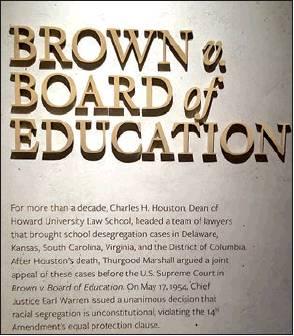
INTEGRATION—Little did I know, that only a few short years before, Mama would come into that same School pushing down the fear and worry that plagued the African-American teachers that had been transferred after integration.
She would work daily to prove that her education and teaching style was as stellar as the other teachers who had less education. She persevered through the assumptions that colleagues voiced covertly and overtly, the assumptions that African American teachers and students were inferior.
She never said a cross word to us or discussed any worries about integration. In fact, at the time, we knew nothing of integration. It was just our way of life.
TEAR STAINS—During the last six months of Mama’s life, I began transcribing her story, Seventeen Years in the Black Room. It was then that I saw the vulnerability and pain of integration. I saw the resilient spirit that I had known, but from a different perspective. I saw the tear stains on the brown fragile paper between notes and sentences written many decades before.
Yet, at home, although she told us stories of history, she shielded us from many of the slights and discriminatory acts that might have come our way.
In the fragility of her last few months, I saw the young woman who outlasted segregation and integration. The woman who made a place in the world that was uncertain for many African Americans; a woman who was an only child; a caregiver who persevered and exhibited great strength, one who raised two small children in her 40s, buried two husbands, nursed and buried both parents, a daughter, an uncle, and a grandchild—all alone.
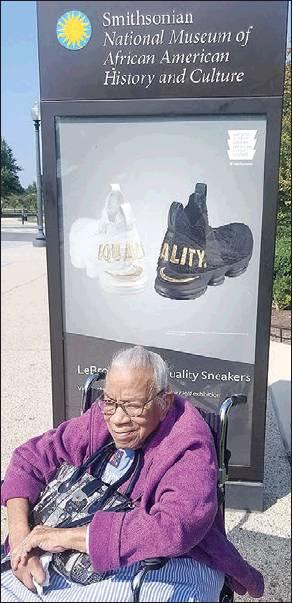
MUSEUM—In August 2019, I had the great opportunity to take Mama to the African American History Museum and the Holocaust Museums in Washington DC.
This was an opportunity of a lifetime.
Although she had become quite frail, it was a great pleasure to see the world through her eyes from that time-frame.
She seemed transported in time as she told us about the Jim Crow Laws, which began in 1877.
They were enacted when the Supreme Court ruled that states couldn’t prohibit segregation on common modes of transportation such as trains, streetcars, and riverboats.
Later, in 1883, the Supreme Court overturned specific parts of the Civil Rights Act of 1875, confirming that separate but equal concept.
Jim Crow laws were a number of laws requiring racial segregation in the United States.
These were enforced in different states between 1876 and 1965. They provided a systemic basis for segregating and discriminating against African Americans. Common laws included literary tests and poll taxes, and other restrictions on voting meant to keep black men from casting a ballot.
There were bans on interracial marriages, and separation between races in public places of business.
She expressed her sadness that in many ways, we as a nation seemed to be going backwards.
Some people demonstrated less compassion and pride in their families. Some minorities failed to vote, a privilege that black men and women fought hard to get.
She talked about how In 1964, President Lyndon B. Johnson signed the Civil Rights Act, which legally ended discrimination and segregation that had been instituted by Jim Crow Laws followed by the Voting Rights Act in 1965, which ended efforts to keep minorities from voting.
RESPONSIBILITY—During these last six months, I marveled at how my loving grandmother, at the age of 98, still had a strong mind, remembered the stories of her past and gave us instructions on how to live in the future.
Mama said: “One casualty of integration is that families became more educated, had better access to education, and moved further away.
“This in turn has created more distance between the family nucleus.
“As our elders, and now my generation has passed away, our children, grand-children, and great- grandchildren, in many cases rarely see and barely know each other.
“The legacy of camaraderie and fun, family support, and the sharing of meals has dwindled to gatherings every few years, and strained connections.”
She said that we should share the stories of our ancestors. Pray your offspring continue to prosper and pay it forward.
“Pull together, even though time may be short and distance between you may be far, she said.
“Tell the stories that you remember. Educate your children, grandchildren, great-grandchildren, nieces and nephews, about the way it was, and the way it will be. Without sharing the stories, the history, we lose touch.”
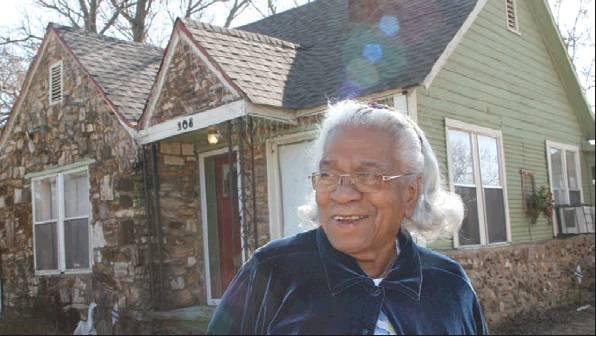
‘SHELL’—Rockdale, a once full and vibrant community is now a shell of its former self.
When I come to visit the graves of my ancestors, I see many of the houses and families that I once knew are gone.
The ancestors are long gone, and the younger generations have moved to Austin and other surrounding communities or other states.
Our jobs are bigger, our houses are newer, and according to Mama, we can travel the globe unlike the days of segregation.
Unlike the days of the Green Book, where African Americans had a map of sorts listing safe places to stay while traveling, you and I can pretty much go anywhere we want.
It is so unlike the days not so very long ago, where some states and areas and hotels were off limits to African American citizens and bi-racial couples were against the law.
This is a blessing.
Mama loved everyone and always sought to see the best in people. She always taught us to treat people nicely, no matter how they treated you.
She tried to deposit a kind word or deed into every person she met, regardless of race or color. She taught us to do the same.
As we continue to move forward, and technology becomes more and more advanced, it is incumbent upon us to knit our families together. It is critical to teach our children.
Treasure the memories of our ancestors, and treat each other the way that we would want to be treated. We must not take for granted all of the things that we have been blessed with.
Treasure the liberties that we have and do not forget the time when we were not so fortunate.
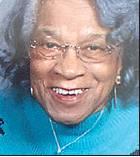
Mama, Susie E. Sansom-Piper left a legacy of resilience, faith, and strength.
I pray that our families and communities will once again draw closer together, rely on each other more, and show today’s children the meaning of family, communication and friends.
Reflections
By Susie Sansom-Piper
Reflections are like capsules of time,
Focusing on happenings of the past,
Captured in visionary images of life,
Cherished by present generations and generations to come
Reflections are like beams of light,
Bouncing on surfaces of days gone by,
Producing thoughts of events that were
And meditations of a future yet to come.
- Log in or Subscribe to post comments.