

This week’s article begins the last few health and wellness features for the 2022 Black History Month series on Black Health and Wellness. This segment, “Rockdale Trailblazers,” features citizens who followed a path that improved the environment or services for others as a result of their journey.
According to a quick Google search, a trailblazer is a pioneer, somebody who’s willing to take risks and go on a path that isn’t already there. They blaze a trail and leave a path for others.
There are many Rockdalians and families who were rooted in the Rockdale community that have gone on to do wonderful things, overcome challenges and make dynamic contributions to the communities in which they live. It would take many years to document all of the great trailblazers who hailed from the Rockdale community. We have a proud and rich diverse history that follows the dynamic citizens who are well known for forging the path for African Americans and other people of color as well as our entire culture. To all of you and your families, we salute you!
Health and wellness, as identified in the first article of the month, is not only about physical health. Good health is not limited to one race or another, but cultural norms, disparity in information and services, as well availability of resources can negatively impact the overall health and ability to thrive in certain populations. There are many methods and specialty fields that contribute to the overall care of a person and lead them on the path to wholeness.
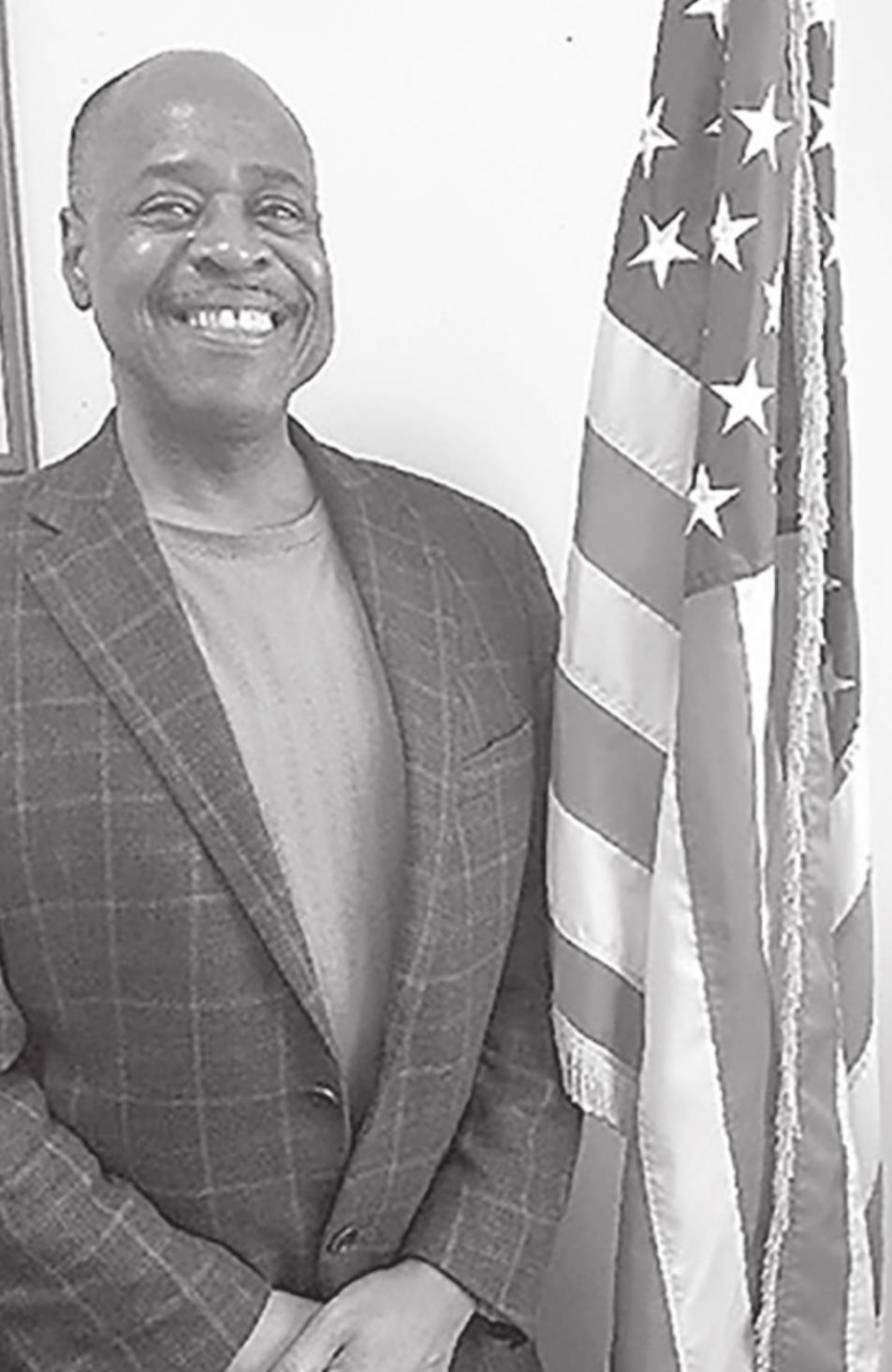
DR. WILLIAM PETTY—One such contributor to these fields is Dr. William Petty, PhD., a psychologist with the Houston Police Department. Dr. Petty is a 1978 graduate of Rockdale High School and received his BS from Austin College, followed by a master’s degree in Counseling and a PhD in Counseling Psychology, from the University of Texas at Austin (UT). One of only nine staff psychologists with the Houston Police Department, William services the mental health needs of officers, their families and eligible aged children. HPD has approximately 6,200 employees including approximately 5,100 officers. Dr. Petty is often on call for the Psychological Services Clinic, working with his eight peers to provide mental health services for officer involved shootings, assist with PTSD and provide overall mental health services for the HPD officers, employees and their families. Telehealth has become more prevalent over the past two years, helping psychologists and physicians identify that there are more ways to reach clients quickly other than face to face. Dr. Petty also serves as Director of Victim Services for victims of violent crimes in HPD.
As a former citizen of Rockdale, I asked William how he decided to become a psychologist and what led him to the police department. According to the US Census, there are less than 4% minorities in the field of psychology, and people of color, indigenous people, immigrants and poor whites have less access to care than members of other populations.
William indicated that while in graduate school in the early 80s, he considered all of the ways that people get access to mental health services. He wanted to be able to see to the needs of people in his community. Looking at hospital settings, clinics and other options, William recognized that a unique way to serve black and brown people was to be involved in the areas where there are tremendous challenges such as the relationship between communities and law enforcement. In small communities like Rockdale, help can be a distance away in cities like Austin, Temple, Waco or Houston. As a result, Dr. Petty began his work with the Austin Police Department in Victim’s Services. The Austin program was the model for the Victim Services program in Houston, where William currently resides. He manages 49 people, coordinating people and systems necessary to restore stability to victims once it is safe to enter a crime scene.
In this role, he sends necessary resources to murder scenes like forensic nurses, ballistics experts, psychologists and other support to people who have been trafficked, raped, or assaulted and witnesses to murders and other violent crimes. Victims Services also provides safe house information to victims of domestic battery, foreign resources to immigrants, terrorist attacks, everything from murder to child abuse and more. He works with numerous resources to provide immediate help or support to the affected. For example, recently, there have been three victims under the age of 13 in road rage incidents in the Houston area.
When speaking about the method for providing support, Dr. Petty said, “The COVID-19 pandemic has been both challenging and transformational.” They have had to learn entirely new methods to reach both victims and HPD personnel. “Many support resources have been closed or have streamlined staffs, and time is of the essence when dealing with victims,” he added. Delay in getting to victims can result in loss of information, evidence and people needed to support any law enforcement actions.
Another key activity is helping people navigate the criminal justice law system. Many times people of color and foreigners distrust law enforcement. In other cases, abusers are also the breadwinner or caretakers. This makes it difficult for victims to go against their abusers as they have already been isolated or separated from family and friends. Finding safe housing and local resources so that people can stay around to support criminal justice activities can be also be challenging.
Prior to completing his post-doctorate work in Houston, Dr Petty had the opportunity to receive the Eric Holder fellowship, working in Washington DC under the Obama administration in the Office of Vic tims Services. In this office, he was able to support activities that provided a national look at who is being victimized and provide compensation to victims of violent crimes. The office supports funding for states on a national level and provides a source for the states to build a case for specific programs to support their citizens. This included resources for Americans victimized abroad, terrorism and natural disasters, crimes against Alaskan natives and other incidents. The office provides the brain power and funds for the government to get involved directly with victims and help communities to recover. One example is the Sandy Hook incident in Newton, CT in 2012. Here, 20-year-old Adam Lanza shot and killed 26 people, 20 of which were children between the ages of six and seven years old.
When asked if there was one thing that he could share with people about his journey, William stated, “We all have definitions of what justice is and what the criminal justice system affords. When people are victims, start somewhere. Use whatever resources are afforded to you as they can often lead to the resources you need. This is especially important in small communities with limited resources.
It is also important to report crime, but also to understand the cultural norms or dynamic that prevent people from reporting crime. “It is only through the understanding of such limitations that we begin the path to wholeness,” he said.
The 2019 Criminal Victimization Report from the U.S. Department of Justice, Office of Justice Programs, provides official estimates of criminal victimizations reported and not reported to police from National Crime Victimization Survey (NCVS).
The rate of violent crime excluding simple assault declined 15% from 2018 to 2019, from 8.6 to 7.3 victimizations per 1,000 persons age 12 or older.
From 2018 to 2019, 29% fewer Black persons and 22% fewer white persons were victims of serious crimes.
Recent National Institute of Justice-supported research also reveals that labor and sex trafficking data appearing in the FBI’s national Uniform Crime Reporting (UCR) Program may significantly understate the extent of human trafficking crimes in the United tates. Researchers discovered a widespread inability of law enforcement officers to identify local trafficking offenses, coupled with inadequate reporting of those offenses that were identified. The study found that inadequate victim identification was a problem not only for law enforcement but also for victim service providers.
Dr. Petty is the third child of the late Dr. Laura Petty Burrell, former RISD Biology teacher, and Mr. James Petty, from the Cameron ISD.
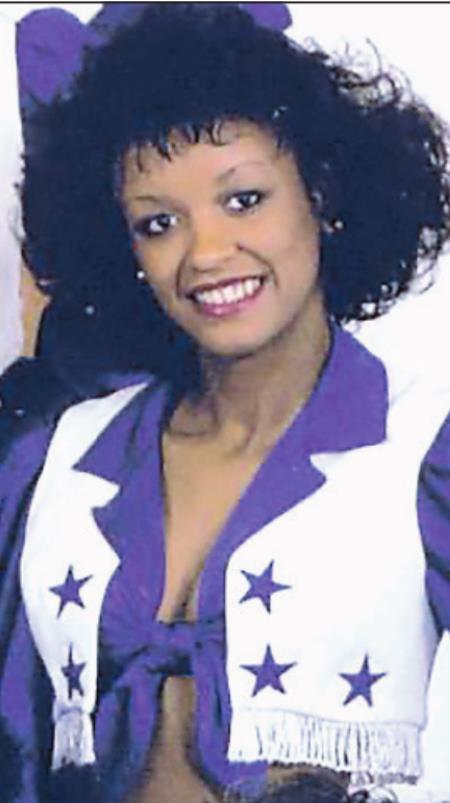
EMILY EMBRA CLARK—Part 2 of the Trail blazers focuses on Rockdale native Emily Embra Clark.
Emily is a 1989 graduate of Texas School for the Deaf. I met with Emily and her mother, Mary Washington-Franklin where Mary signed on video to Emily as I asked questions.
Emily was the first deaf Dallas Cowboy Cheerleader, from 1992-1993. Mary notes that they didn’t know Emily was deaf until she was about 18 months old. At the time, there were no specific tests for infants and very little technology to help them identify a challenge. Mary indicated that she had German Measles while pregnant and believes that it contributed to Emily’s disability. The doctors couldn’t tell if there was a problem, so Emily’s parents, Mary Franklin and Charles Embra, took her back and forth to Scott & White Hospital in Temple where they finally discovered that she was deaf.
Coming from a small town, with a disability and being black, I asked both Mary and Emily how she fared with support services. “It was difficult,” Mary admitted. Emily signed to her mother that initially she was in special education classes where she was one of four or five deaf children from surrounding towns of Hearne, Georgetown and Rockdale. She didn’t notice much difference from a racial standpoint until she was in a beauty pageant later where she received second place to a hearing impaired Caucasian.
While in school, two of her teachers could sign. Emily always helped her teachers to communicate with the other kids. Although she went to regular elective classes, Emily spent her formative years in special education until 9th grade because she was deaf. She learned to sign by going back and forth to Temple for support. Once in the 9th grade, Emily transitioned to Rockdale High where she became one of the Golden Girls. The next year, Emily attended Texas School for the deaf in Austin.
A beautiful young lady with a bright smile, Emily signed how she helped the teachers in elementary school learn Linguistics Language Program sign language and served as a Peer Assistant Leader in the school for the deaf.
She also taught her friends some sign and the alphabet so that they could communicate. She smiled, signing that they also wrote lots of notes. Emily indicated that sometimes it was a challenge to communicate with the hearing, but she always kept a good attitude and was usually happy.
While in school, Emily entered and placed in several beauty pageants including Queen of Ms. Southwestern College for Deaf in Big Springs in 1990.
Emily married Vincent Clark and moved to the Dallas area after completing some college. Her positive attitude led her to try out for the Dallas Cowboy cheerleaders after seeing an ad on TV one afternoon. Emily smiled as she indicated that there were over 500 girls trying out. Her mother went with her and was allowed in the closed tryout session.
She made it through three rounds of tryouts to become a Cowboys cheerleader. This accomplishment led her to Japan for the Superbowl where she met Michael Jackson, Marlee Martin (deaf actress) and other celebrities. Emily noted that after her season as a Cowboy Cheerleader, she needed a “real job”. Cheerleaders don’t really get paid, only getting minimal funds for travel and food. The Omni Hotel sponsored their Super Bowl trip. Emily received an Associates of Arts and Fashion from the Academy of Art Fashion in 2014.
These days Emily says for minorities and any citizens with disabilities, “It is important to stand up for what you believe in. Realize your dreams and go for it no matter what the limitations. Work until you make it to get where you want to be and go forth.”
Emily has worked a number of jobs in the Dallas area expanding the capabilities and culture everywhere she goes. She was an accounts payables representative for 12 years for a large grocery chain in the Dallas area. Her husband, Vincent, is a police officer in the Dallas area. Emily represents perseverance and determination without limits. If you need help, there are resources available.
Demographics from the Survey of Income and Program Participation (SIPP) and Galludet University shows that fewer than one in 20 Americans are currently deaf or hard of hearing and less than 4% are under the age of 18. In addition, the National Deaf Center (NDC) on Post Secondary outcomes indicates that in the U.S. less Black people from the age of 25-64 are deaf (1.8% compared to the overall population rate of 2.3%). The percentage of deaf people identifying as Latinx is 3.7%.
- Log in or Subscribe to post comments.