


Editor’s note: The late Susie Sansom Piper, authored Black History Series for The Reporter over a 42-year period. This year’s series is being written by her granddaughter Tamara Powell.
According to the Association for the Study of African American Life and History, the black family has been a topic of study in history, literature, the visual arts and film studies and social policy. Its representation, identity and diversity have been reverenced, stereotyped, and vilified from the days of slavery to our own time. The black family knows no single location, since family reunions, and genetic ancestry searches testify to our spread of family members across states, nations and continents. Therefore, the 2021 theme for Black History Month is The Black Family; Representation, Identity, and Diversity.
Over the next four weeks we will highlight four families and share the importance of the family, the dynamics, values, challenges and successes of the Rockdalians featured. The dynamics of African American families may vary from family to family. Extended families, one and two parent household, families led by grandparents or single parent households generally have the same goals—to provide a stable environment for the occupants, and make a decent living. This is not to say that all families are the same; but, essentially provides a window into the dynamics of several families with the goal of showcasing hard-working, accomplished adults with values instilled by the small-town community of Rockdale, and the families in which they lived.
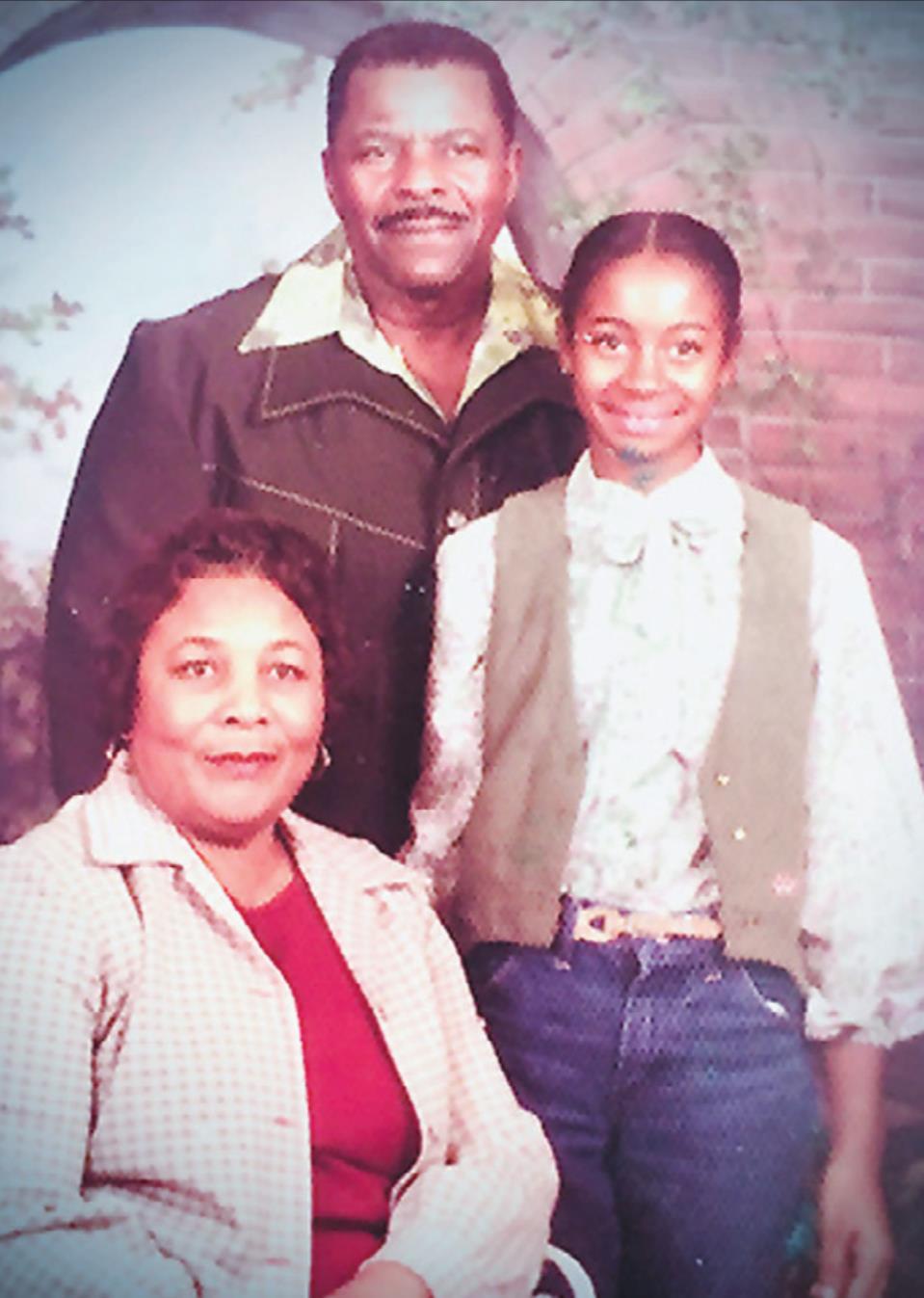
Mae Lois Metcalf Powell grew up with her parents Clara Watson Metcalf and Archie Metcalf. Ms. Emma Clara as she was called, was a revered licensed beautician, and owner of Emma’s Beauty Shop. She came to Rockdale from Pelam, a small south Texas community. Mr. Archie, a master plumber, and businessman, was from Dawson. Both were small towns outside of the Corsicana area. The couple moved to Rockdale for work in the 1950’s. Shortly after, Mr. Archie enlisted in the United States Army, serving his time during World War II.
After returning from the war, he obtained work at the W.T. Pearson furniture shop, during which time he obtained his master plumbing license. He started his own plumbing business by providing service to many of the clients from the furniture store, as well as, neighbors and friends. Mrs. Emma began working at the Aycock High School in the food service department. She later obtained her beautician’s license and opened her shop with patronage by many of the residents across the tracks. Many of the families in Rockdale, especially on the black side of town had lived there for several generations. Having moved into the community, the Metcalfs were somewhat outsiders and not necessarily privy to some of the towns’ generational history. Mae describes this impact on her family as sometimes challenging for her parents.
They were part of the community, but not always accepted as such. Moving into the community with many families who lived here for generations, there seemed to be something different about us.
“My parents essentially provided a service for the Rockdalians,” Mae said. Mae was a beautiful small little girl with black wavy hair and dark soulful eyes.
“Before I could understand or even really know what it meant, my mother told me that I was different; but, not different.” Mae said. That difference, she referred to was the fact that Mae was adopted. Mae was born in Fort Worth at a Catholic Maternity Home, where an adoption had been arranged by the maternal family. At 12 days old, Mr. Archie and Mrs. Emma brought Mae home to Rockdale.
According to the Adoption Network, History of Adoption, “Before the mid-19th Century, adoption was often done in secret. Many families commonly adopted children from extended family members. Children were often placed with family members to give them more of an opportunity for success. Other reasons for adoption included finances, illness and death.”
Being an adopted black child in a small town was sometimes uncomfortable for Mae as she grew to apply her own understanding to the meaning of “adoption.” Much like her parents who had moved to the Rockdale area, she was “different, but not.”
She said that being adopted has “layers.” In the beginning when you’re young, you don’t really understand it or know why you are different. Mae admitted that she didn’t really know what it meant, when her mother kept telling her that she was different but not. That is, until one day when she was playing down the street, another child cruelly told her that those weren’t her “real” parents, because she was adopted.
When Mae went home crying, her mother became angry, explaining that this was the reason she always told her that she was adopted, because she wanted her to understand. That way, if anyone came to her, she would not be caught unaware.
She was growing up in a two-parent household; but, they were not her birth parents. As I probed further about her feelings and the adoption, Mae indicated that she always felt different, although her parents loved her dearly and were extremely protective of her.
As the only child of the union of Ms. Emma and Mr. Archie, Mae often felt somewhat abandoned and insecure.
In the tight-knit community on the other side of the tracks, in a house on the hill on Vernon Street. Mae was one of the Vernonstreet kids. The adults in these houses, like much of the community across the tracks looked out for each other, went to one of the four churches together and disciplined each others’ children if they saw them out of line (and sometimes not out-of line).
Mrs. Emma kept Mae involved in numerous activities when she was growing up. These activities were designed to boost her self-esteem, build her character and help her to be a more well-rounded young lady in preparation for adulthood. The family was devout Christians, and Mae was often involved in church activities with other youth. The New Hope Baptist Church was a strong foundation in the family. It was understood that Sundays, they would be in church.
She won the title of Miss Lincoln District over contestants from 18 other churches in the Northern District. Mae also won the title of Miss Congeniality in the 1982 Rockdale Fair Queen Contest. In high school, Mae took classical piano lessons, played clarinet in the Big Blue High School Band and participated in UIL one-act plays. Being in the band was like having a large family and belonging there, according to Mae. She loved the band.
“My parents instilled being honest, respectful to the elders, truth and holding family dear,” Mae said of her upbringing.
Her father always told her that your word is your bond, always do the best you can, and excel at whatever you do. “They were good people with strong values” she said.
Mae said that growing up, she often felt misunderstood. “I was often sitting back and thinking or analyzing situations,” she said.
Mae felt that people took her quiet observations as standoffish and distant. She indicated she is really free-spirited, but cautious.
After graduation, Mae worked in the banking industry and attended college in Austin. There, she met her husband Edward Powell. They married in 1987 and the couple had a daughter , Kelly, a few years later. Edward was in the Army. After marriage, the couple was stationed in Fort Polk, La., for eight years. During that time, Mae continued working in the banking industry.
She moved to Houston to further her studies at, Texas Southern University, obtaining bachelor’s degree in Marketing. While in school, she worked in the oil and gas industry.
Sadly, as Mae was beginning her career, both of her parents became ill. Mae was attempting to balance work, care for her parents, motherhood, marriage and residing in another city. Both parents were gone by the time Mae turned 32 years old.
After the death of her parents, she isolated herself, searching for solace.
As an adult, she said that she considered looking for her birth mother, but she said “I had such a love for my mother and father, I never sought out my biological parents. It felt like it would be betrayal. And I didn’t understand why they never looked for me.”
Her husband, Edward, left the military and worked for Dell Computers and a family-owned law office in Houston before accepting a position as a senior buyer in Iraq.
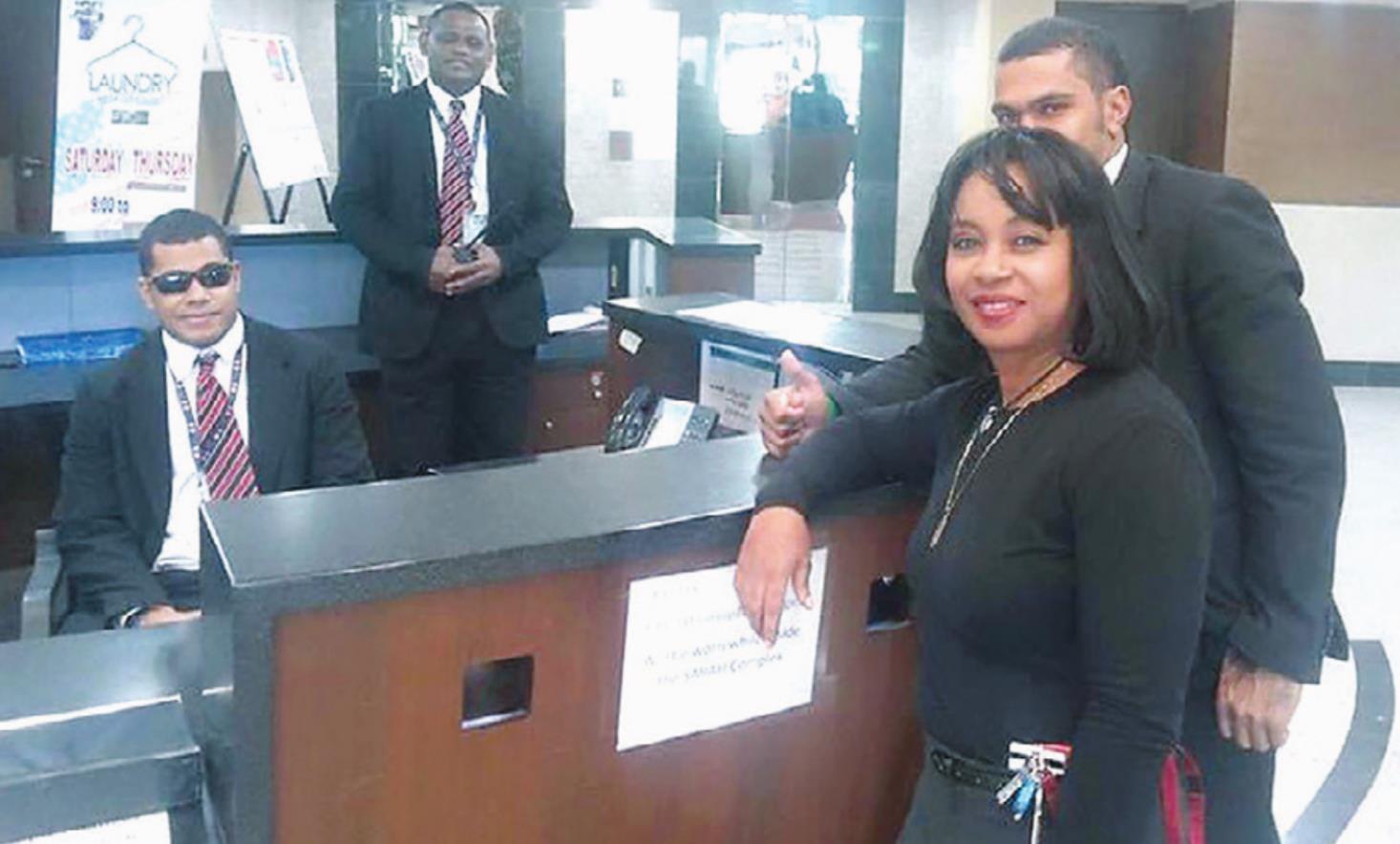
He told Mae stories of the beauty and destruction in the country. When Edward came back to the states, Mae decided to take her own journey to Iraq. She sent her application for employment and one week later was on her way to Iraq.
Leaving her baby, Jay, who was not even two years old, and a teenage daughter, in the care of their father and the full-time assistance from a trusted caregiver.
The journey that would take her there changed her life forever.
“This was the best and most difficult life-changing job I have ever had,” she said.
She was a subcontract administrator for Kellog Brown & Root, leading a team to purchase everything to support the military. According to Mae, they built cities inside of compounds to make life less stressful for the men and women putting their lives on the line. They rebuilt cities, provided doctors, medicine, and dental to locals that were affected by the destruction, provided protection for the elderly, women and children, and procured goods and services worldwide.
“If I had not been so young, I would have realized how much danger I was really in during that time,” she said.
The things that she saw on ground changed her perspective for her life, Mae said.
“The United States did a lot of good. We tried to fix things before we left,” she said.
The job also allowed her the opportunity to travel and explore Dubai, United Emerates and Aman, Jordan with her family.
Today, Mae is proud of her work to establish the first procurement model for war torn cities. This model is now being used wherever war is happening to establish structures, food, transportation and safety for our nation’s military.
After leaving Iraq, Mae traveled to Kuwait on a short-term assignment. After returning to the states, she continued her work administering government contracts moving her family to Tysons Corner, Virginia, just outside of Washington, D.C.
Later she moved back to Houston to work for NASA JSC supporting the International Space Station. Subsequently she landed a job in Austin. Mae reflects that being in Iraq for two years, taught her so many lessons. She now tries to look at the entire picture before making decisions. Sometimes this thought process and reflection may cause people to misunderstand her or surmise that she is aloof. She also practices more selfcare these days, surrounded by her favorite desk and artifacts from her travels as well as memories left from her parents.
Today, Mae lives with her husband Edward and son Jay, in her childhood home, the house on Vernon Street. Jay is now a junior at Rockdale High. Their daughter Kelly, has two sons and baby on the way, residing in New Orleans, La., since her graduation from Rockdale High in 2007. Kelly works in the medical field as a medical technician, assisting in the Urgent Care of with COVID-19 patients and facilitating in vaccination clinics throughout New Orleans.
In closing, I asked Mae what she most wanted to communicate in this segment.
Without hesitation, she said “I am a fun-loving proud woman. I came home to Rockdale to raise all of my children who have gone through the Rockdale public school system, just as I did. I am a proud Rockdalian, and proud Rockdale Tiger! My time in the Big Blue Band was some of the best times in my life. It was a family.”
Mae has come full circle. Reflecting on her parents wisdom, Mae strives to do what she says she is going to do and remember her mother’s words
“If God be for you, He is more than the world against you.”
- Log in or Subscribe to post comments.