


Editor’s note: The late Susie Sansom Piper, authored Black History Series for The Reporter over a 42-year period. This year’s series is being written by her granddaughter Tamara Powell.
I am exploring a topic as familiar to me as a comfortable old shoe. The expectation of greatness, education and respect in a family of educators. The theme for this 2021 Black History Month is The Black Family: Representation, Identity and Diversity.
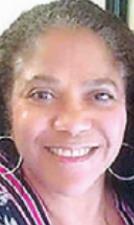
Madelyn Bowman (Petty) is the youngest child, and the only girl, of Dr. Laura Petty Burrell and James Petty. James Petty was a second lieutenant in the Army in 1954 stationed in Germany. Originally from Cameron, after his military tour, he took a job at the Cameron Junior High. He and Laura bought a home in the Rockdale area, where she acquired a teaching position at the segregated Aycock High School and later was an award-winning educator in biology at Rockdale High School. The Petty’s were parents to three boys, James, Edward and William, with Madelyn coming 10 years behind.
As a young girl and the baby of the family, Madelyn recalls that everyone had authority over her.
Her brothers were quite a bit older with Eddie being 14 years older. She remembers her brothers told stories about having to wash their hands with special soap before they could hold her as a baby.
In the Petty household, “there was an expectation of excellence,” Madelyn said. Both of her grandparents were educators with master’s degrees. She remembers that as she grew up, she felt inadequate in the face of her mother’s eloquence and commanding spirit, and her brothers’ talents. As the only girl with such a large gap between her siblings, Madelyn was the family princess. A daddy’s girl at heart, she often sat and watched sports with her father for hours on end, just feeling the comfort of his presence. Because her father was a man of few words, Madelyn learned most of her lessons from his demeanor and actions.
She said that she was much more like her father than her mom. As a daddy’s girl. It would be hard to convince her that something was wrong with her dad. Her dad was super smart in math according to Madelyn and her mom was practically a genius. She felt growing up, that she was much more like her dad, easy going and happy to beat her own drum.
Madelyn remembers that her mom would often stay up until the wee hours of the morning balancing her checkbook. When she decided she wanted something, she would save money to get it. Her mom built additions to the house with cash that she saved. Mrs. Petty paid her tithes and saved 20 percent of everything she made and bought savings bonds.
As educators, particularly in the Black community east of the tracks, teachers were well respected and looked at as authority figures. Teachers were mainly revered and often relegated to positions of higher status and stature although they did not necessarily think this way. The children of teachers were also held to a much higher standard, much like preachers’ kids in the community.
Madelyn says that her mother was “foreboding in general”, with her commanding voice and small stature, she was a giant in all aspects. After segregation, she moved to the Rockdale High School. I remember Mrs. Petty had a special way of getting the class’s attention. “Mr. Franklin, is that gum in your mouth?” “Miss Hebert (hee bert vs. Abear), are we still talking?”
Speaking with Madelyn brought back memories of the carefully enunciated diction, and the strong tenor-like voice of her mother. Madelyn sounded exactly like her.
The Petty family was active in church. Often the nucleus of the Black community, you were expected to be there each Sunday at a minimum. In the Petty family, if you were involved, you should be leading. If you were to learn something, you needed to learn to be the best. Taking up their roles as leaders. Mr. Petty was not only on the Deacon Board, he was “chairman” of the board and a Mason. Mrs. Petty was head of the deaconesses and read the weekly church announcements with distinct diction and carefully enunciated words. William Petty was an accomplished pianist and choir leader. Madelyn “buckled under all of that greatness,” she says. The sheer weight and recognition of the expectations to be something more than, someone greater than just average, was a constant to Madelyn growing up. “In a family where everything had a place, and everything was in its place, I never had a place in it,” Madelyn said. If you got on Mrs. Petty’s
If you got on Mrs. Petty’s bad side, “she would campaign against you”, says Madelyn. She was so effective at her campaign, that you would “lose your place on city council” or whatever position you held. She also had sharp wit and was funny, but ofter saying things under her breath so only those closest could hear.
In the first grade, Madelyn remembers that she had Lucy Battle for a teacher. Battle, also from the Aycock schools, was an accomplished first grade teacher. If you were in Mrs. Battle’s class, and you were a teacher’s child, like both Madelyn and I, you were expected to be stellar. Madelyn was no exception. She read well above her grade level and was in the highest 1st- grade reading class. Battle took her under her wing. This set her on a trajectory for academic excellence and led to her being in honors classes throughout high school.
Madelyn says that although the town was literally segregated by the railroad tracks, she never thought she was deprived or any less than other people. But she remembers a lesson she learned as she was prepared to sell her girl scout cookies. She and her mother went to sell cookies across the tracks. A woman opened the door when they knocked and her little girl said, “Is that a nigger mama?” Madelyn was stunned. Her mother looked down at the lady, a disapproving stare. First, we didn’t use that derogatory word. Second, Madelyn remembers looking with incredulity, thinking “I am a princess.” What the heck? Is she talking about me? “She thought, everyone doesn’t know I am a princess?” Nonetheless, the woman was so embarrassed, that she bought a lot of the Girl Scout cookies.
Madelyn, as the baby, and a girl, kept everyone hopping. The family was always trying to figure out where she was. She rebelled against being put in the family box, neat and in her place. As such, she could often be found down the street, talking to strangers, at a neighbor’s house or anywhere on or around Vernon Street. Like most of the children on the east side, particularly if you had parents who were fairly strict, Madelyn knows that she had the protection of knowing there was always someone there to pull her back from a precipice, or call her parents if she was out of line.
This was another cornerstone of the black community during this time. “The community was supportive,” Madelyn said. “Anyone was free to correct, and there would be no disrespecting them or talking back. You just did what they said.”
Madelyn said she rebelled a bit as she got older because it was all too much. Madelyn always “colored outside the lines.” Mrs. Petty was constantly having to say, ‘she didn’t mean that’, because of her mouth. Junior high and high school were challenging for Madelyn and her mom. Puberty often drove her Mom to lead her in prayer. Mrs. Petty channeled Madelyn’s energy into tennis lessons, dance, district church congress and other activities. At Rockdale High School, Madelyn served on the RHS student council, was class president all four years, president of the student body, president of the church youth department, and often spoke at church events. Madelyn was also a cheerleader from the seventh through eleventh grades and played French horn in the band.
Madelyn believes she had some advantages growing up. A lot of it had to do with attitude, she said. She was fearless and had a strong will. She chose what she would entertain and be involved in. She said that she was resilient and saw the things that her family had accomplished, as an indication that she could pretty much do anything. Sometimes in her “youngest childishness,” she wouldn’t do certain things. It never crossed her mind that she couldn’t do a certain thing. She thought that she could do anything she put her mind to and wanted to do.
Values that were implicit to Madelyn’s learning were that there is a way to accomplish anything that you really want to do, you just have to figure out what it is and make a plan.
Madelyn also taught her son that you should never shoot low, because other people will do that for you. She has supported her son by being present at all of his activities.
“Parental presence is important to a child,” she said. “If you are not there to cheer your child on, others may not.”
After high school, Madelyn graduated with a bachelor’s degree in political science from Texas A&M University and a doctor of jurisprudence from the law school at Baylor. Her mother got her doctorate from A&M while Madelyn was there.
Madelyn married and had her son, Cedrick D. Bowman Jr.
She practiced law for about 10 years, then decided to teach. She was hired as an adjunct professor at Tarrant County College and teaches government.
She has plans to move into administration.
Madelyn believes that she is fulfilling her calling. She is a member of the Delta Sigma Theta sorority and the district coordinator of the Phi Beta Kappa.
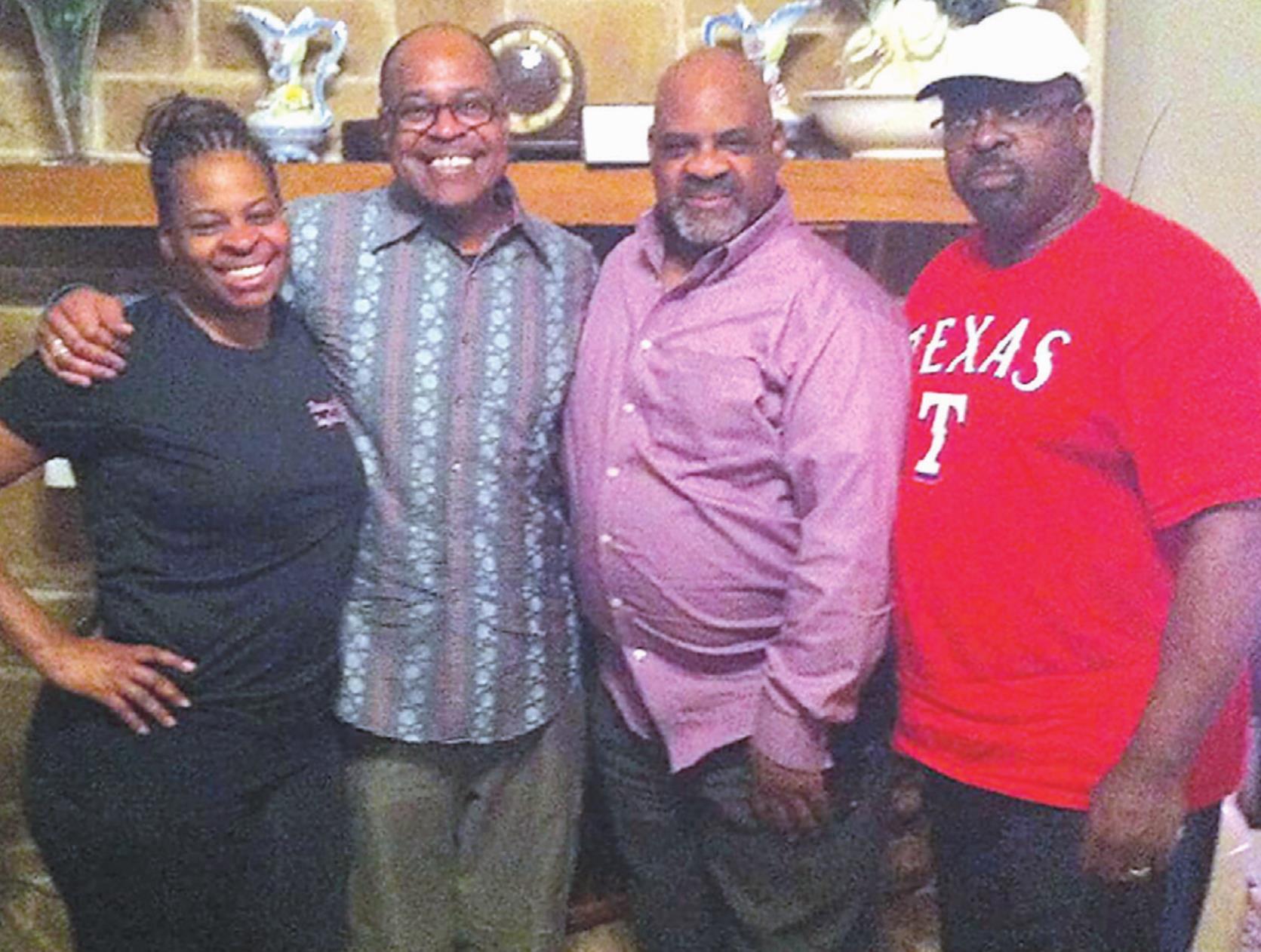
She has also been a marathon runner as part of the group Black Girls Run. Her son is a sophomore baseball player at Trinity University in San Antonio. Madelyn is his biggest fan. As for her brothers, James graduated from West Point, William has a doctorate and works with the Houston Police Department and is a musical genius, and Eddie is retired from an executive position with the state and is now a church pastor.
Madelyn spoke about living with greatness at her Mom’s funeral in 2018.
“It is empowering, it’s liberating and ultimately, silently, you feel as though you have to do something worthwhile.”
- Log in or Subscribe to post comments.