

Editor’s note: The late Susie Sansom-Piper, authored Black History Series for The Reporter over a 42-year period. This year’s series is being written by her granddaughter Tamara Powell.
In this fourth and final week of the Black History Month Series on The Black Family: Representation, Identity and Diversity, I sought to connect the common threads that bind us all together, the deep roots of ancestral excellence, pride, a strong sense of community, and the basic human desire to belong and leave a legacy larger than ourselves.
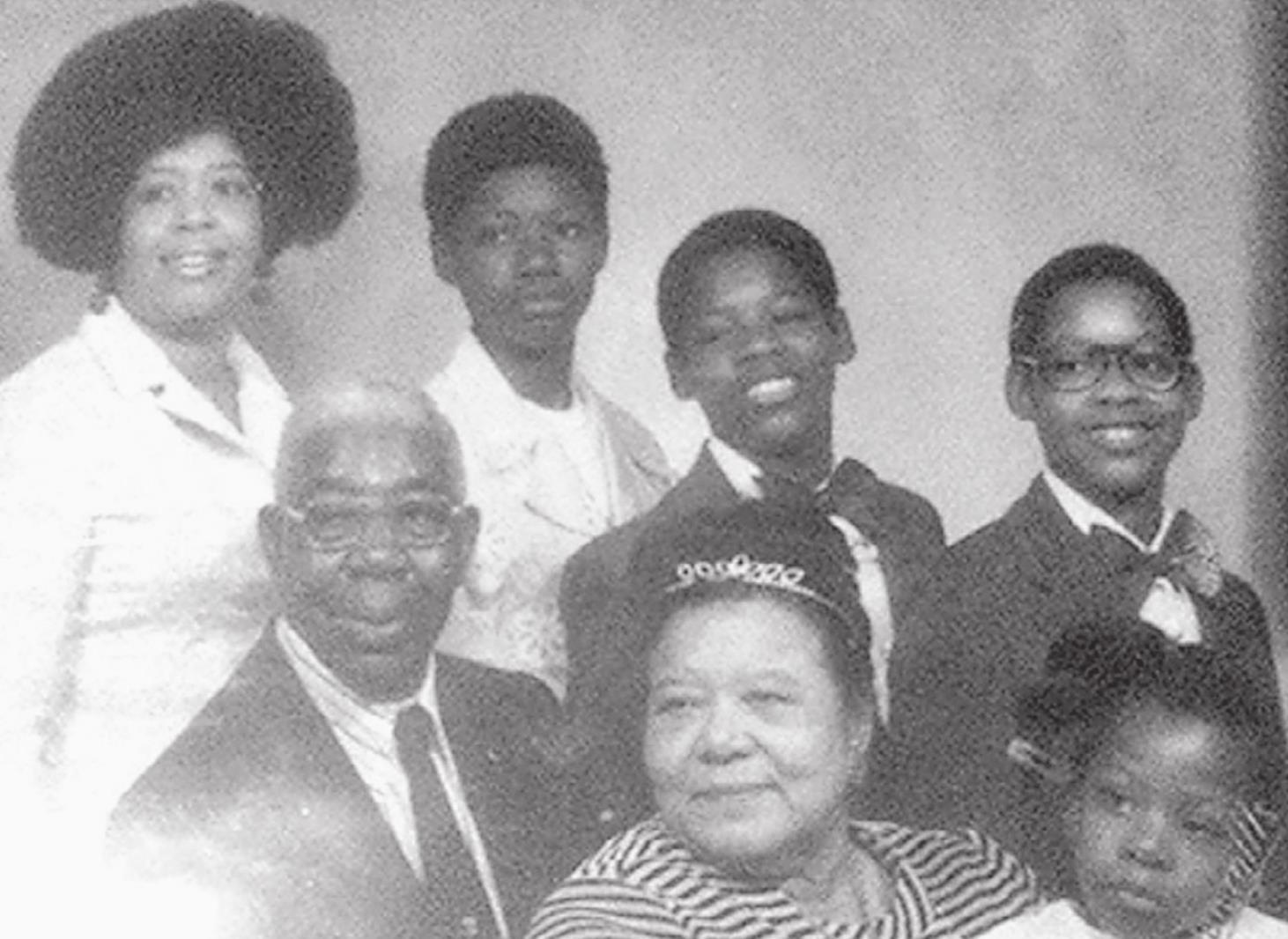
A large cornerstone of this legacy began at the segregated Aycock High School. There, Professor O.E. Wilhite, was a longtime principal at Aycock until around 1965. After this time, he assigned my grandmother, Susie E. Sansom-Piper, as the head teacher and principal to transition the school for integration. Wilhite and his wife, Marcella Leona Wilhite, were prominent citizens in the Rockdale community. Twin grandsons Bracy and Lacy Lovelady attended the last kindergarten class at Aycock, where Mrs. Snelgro was their teacher. After integration, they went to the Rockdale elementary for first grade. Eldon Ball was the principal at the time. As fraternal twins, the boys would often travel back and forth between their parents’ home (Willie Henry Lovelady and Mildred Maxine Wilhite) in Houston, and their grandparents’ home in Rockdale. Both of their parents had matriculated at the Aycock school and grown up in the Rockdale community. When asked what dictated where they lived at a particular time, Bracy remarked that it was dependent on what the boys wanted to do.
Bracy remembers his time with his grandparents happily. With two sets of grandparents in the Rockdale community, Artis and Fannie Lovelady and the Wilhites, Bracy says that he and his brother were afforded the opportunity to have most things that they needed and wanted. Similar to other reports, Wilhites status as an educator, in the black community, carried with it, the
When asked how the values taught in his grandparents’ home impacted him, Bracy said that his grandfather taught them that it is not how much money you make, it is how well you manage what you make. I wonder if this philosophy about money and frugality was ingrained in the educators from school and their parents, or simply a by-product of the time from which they came. It was possibly a lesson learned from not only a time of segregation, but also a lack of supplies and sustenance for many families during World War II.
After first grade, Bracy said that they would travel back and forth from Houston to Fort Worth, where Wilhite owned and managed a group of apartment buildings. When he decided to sell those properties, he came back to Rockdale and remodeled a relatively large house on the hill. Bracy and his brother returned to Rockdale and attended Rockdale schools from the sixth through 12th grades. Bracy said, “they didn’t get everything
Bracy said, “they didn’t get everything they wanted; but they were never left needing too much and they didn’t get everything they needed; but, they were not wanting for too much.”
As grandson of the professor, Bracy indicated that people often mocked him because of their grandfather’s stature in the community. A common remark was “y’all think you are something, you think you are better than we are.”
But Bracy said that the family would go down south in the summer to work for extra money, picking watermelon, cotton or whatever work was available to make ends meet in the summer. The family had acres of land in town that
The family had acres of land in town that they also farmed. They call food organic now, but it was home grown then.
They grew up at Allen Chapel AME, one of the four churches across the tracks. His grandparents were active in the church and Bracy played the organ and was the youth choir director.
“Just watching our grandparents was a positive example. They believed in family and taught us not to brag,” he said.
They very seldom got sick, even in old age. They loved their home and domain. Once you moved them out of that area, their health declined.
Bracy said they had to follow the golden rule, “do unto others as you would have them do unto you.” They ate at the table as a family daily, and always said grace. These are things we have lost in the hustle and bustle of families today.
He said the safe zone was across the tracks. When you got through with school and activities you had to “get back across the tracks,” that is the safe zone, he said.
Bracy remembers some things that were unfair for black educators in the community. “Everyone had to drive a Ford LTD, purchased from Mr. Red Hogan, if they wanted to stay working,” he said.
Education was an important commodity for success in his family. In school, Bracy said we all got along. There were a few teachers that were prejudiced or showed favor; but most students got along well.
In Rockdale High School, Bracy played the E flat Alto Saxophone and later changed to the baritone saxophone. He was student body president in 1979-80. He also received a TAME Award and a Masonic scholarship.
After graduating high school, he went to Prairie View A&M University, a historically Black university. He graduated in 1984 with a bachelor’s degree in accounting with a minor in education. He is also a member of Phi Beta Sigma Fraternity, the Masonic Lodge, and the Houston Buffalo Soldiers.
Bracy also received a master’s in administration and supervision from Concordia University.
His twin, Lacy, graduated from the University of Texas with a business management degree. Lacy is retired from the city of Houston as a director of finance and city auditor.
Bracy has been teaching school for 37 years (30 years in Houston ISD and 7 in Aldine ISD). Following in his grandfather’s footsteps, he has educated students at elementary and intermediate levels in all subjects.
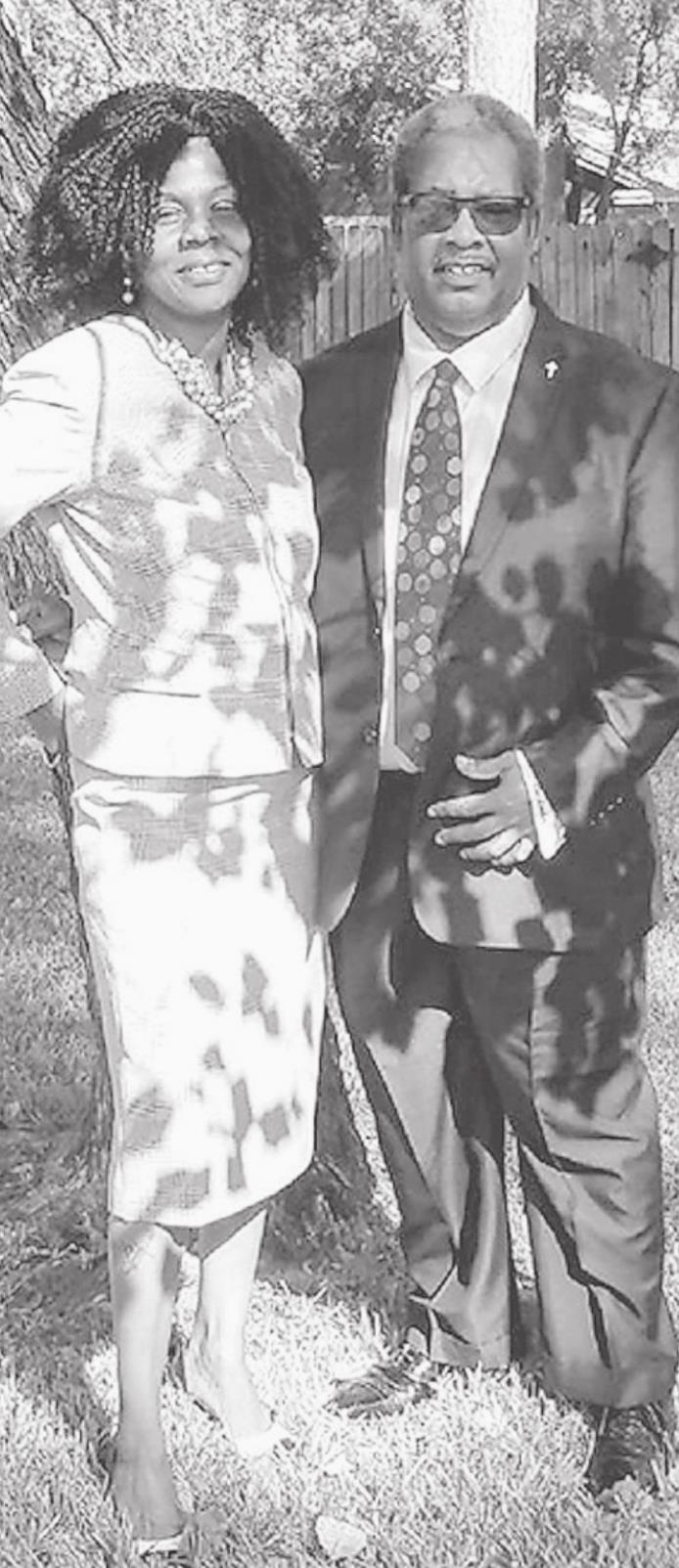
He is pastor of the Greater Community Missionary Baptist Church in Houston, where he also uses his musical talents. He resides in Humble with his wife Angela Fay. The couple has been married for 22 years and have nine children and 13 grandchildren.
His message to his family is to: • Follow the life path that is set for you.
• Follow the life path that is set for you.
• Make your own footsteps in your life. Make good steps where you will be happy.
• Do the right thing.
• Love, together,and unity. Make right decisions and you will get right results/ reward. Trial and error.
• A winner never quits, and a quitter never wins.
“I am still on my way to winning,” Bracy said.
In writing this feature, it brought back fond memories of my childhood in Rockdale. I realized that no matter where life takes us, we are always connected.
A thin, invisible thread connects us all, if we only look for it. Here, I have come full circle. Bracy’s grandfather, Professor Wilhite, taught my grandmother Susie Sansom-Piper. She in turn came back to teach Professor Wilhite’s children, Bracy and Lacy’s parents, and the twins. Bracy and I hope to reignite the Aycock alumni reunion sharing history and contributing to the success of the community in another chapter.
I remembered the lessons taught and the swell of pride in knowing we would always strive to do our best and continue the legacy. I reflected on the pride we felt when we rose to prominence in our extracurricular activities whether it be band, student council, UIL, sports or other. I remember, like it was yesterday, my classmates featured over this past month, their parents, siblings and neighbors. I remember the good times we had in school and in the community.
I remember the people who watched over us, corrected us, and provided an example for us to become noteworthy citizens—most of whom have now passed away. I also consider the camaraderie we
I also consider the camaraderie we shared with classmates of all races and ethnicities. The friendships we forged that lasted over decades in many cases, very seldom were subjected to the racism our forefathers experienced, only to be strained by the state of our nation over the past several years. And although these memories seem as fresh as a few light years, I am happy that I was fortunate enough to have had the experience of growing up in Rockdale, where my neighbors and community sowed seeds of resilience and lent a helping hand to those who needed it.
I look on the Rockdale community with gratitude and love. I am especially thankful for the classmates who dared to share their stories in this year’s black history month series. These are the cornerstones of the black families’ representation, identity and diversity.
- Log in or Subscribe to post comments.