

Is it the start of a much-hoped-for turnaround or just a positive blip in a sea of negative numbers?
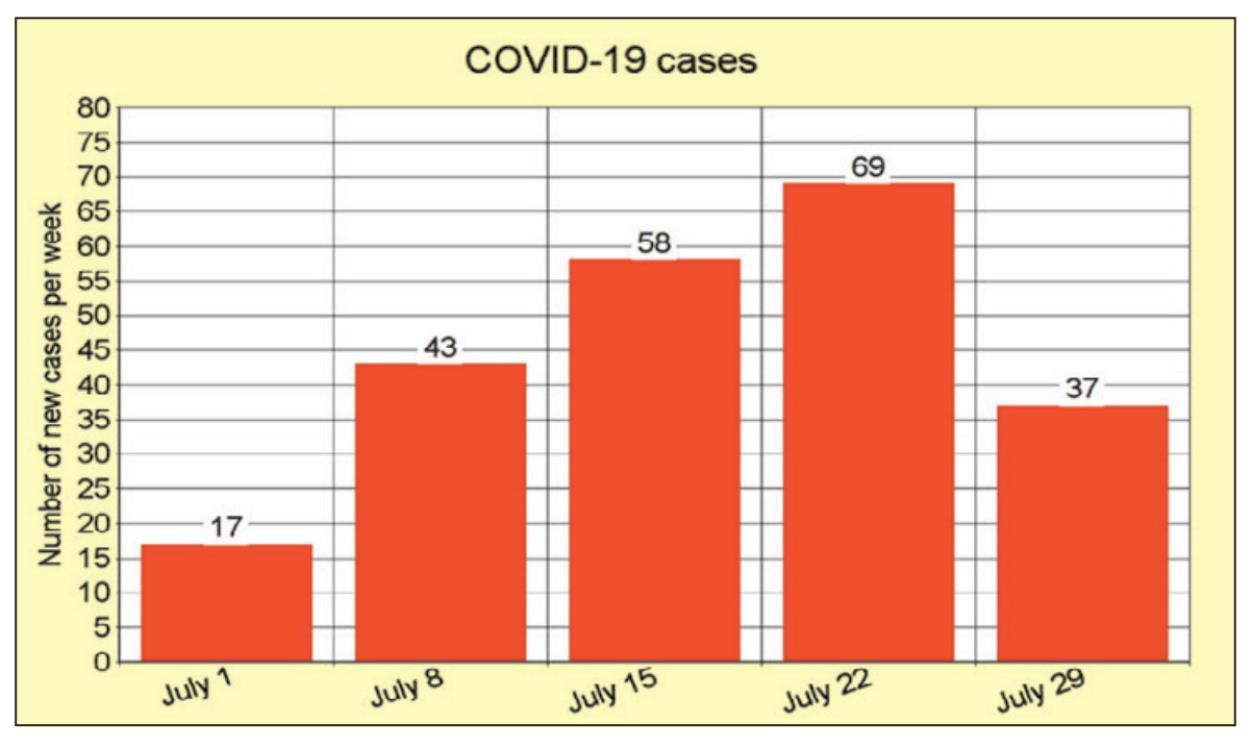
The jury is still out but COVID-19 stats got better during the week in Milam County and throughout Central Texas. Thirty-seven new cases were
Thirty-seven new cases were logged during the week as of Reporter presstime Wednesday morning.
That case count represents a substantial decline from the 69 logged during the previous week and it’s the lowest weekly number of new cases since 17 were recorded the week ending July 1.
Over the weekend only four new cases were reported. That encouraged County Judge Steve Young enough to tell commissioners during a regular meeting Monday he believed the county’s “mask up” order was working.
NEW STATISTIC—There were 44 active cases in Milam County on Wednesday morning, compared to 45 last Wednesday, a decrease of one.
The Milam County Health Department is monitoring 69 persons and there are four Milam residents hospitalized, one on a ventilator as of Wednesday morning.
The county has logged two fatalities from the pandemic, on April 20 and July 10.
During the past week, the Milam County Health Department initiated a new statistic in its daily COVID-19 reports.
The category is “probable cases.”
That refers to a person who has tested positive for the virus in a test which measures antigens—a toxin or other foreign substance which induces an immune response in the body, especially the production of antibodies—but not yet deemed positive in a more accurate test which measures genetic material.
Antibodies are substances produced by the human body to fight off viruses and harmful bacteria.
Young said persons who test positive for antigens are placed in the “probable cases” listing until such time as a definitive reading is obtained from the more accurate PCR test, which measures genetic material. As of Wednesday morn
As of Wednesday morning, there are six persons in the probable cases category.
STATE NUMBERS— There may actually be a glimmer of hope in the Texas numbers of COVID-19 cases for the first time since the virus’s recent surge.
A survey by CNBC television earlier in the week showed new positive cases of COVID-19 infection had dropped 20 percent over the past week since record high numbers early in July.
And that’s not a “weekend number.” (Some health agencies tend to under-report cases Saturday and Sunday).
CNBC uses a seven-day rolling average to “smooth out” gaps and inconsistencies in day-to-day reporting.
There’s even good news from Austin, one of the nation’s “hot spots” for COVID-19 infections.
Dr. Mark Escott, Austin Public Health Interim Authority, said the capital city had seen 12 straight days of improvement in the seven-day moving average in both new cases and hospitalization.
Dr. Escott termed that “a significant improvement.”
- Log in or Subscribe to post comments.