

As I wrap up this year’s Black History segment on Health and Wellness, I thought about the numerous topics that could be beneficial to not only black Americans, but the public in general. We all face challenges with health care and remaining well, although disparities in care are apparent and much more prevalent in communities with people of color. Contributors to increased morbidity in black Americans, people of color, and financially insecure populations include lack of adequate care, lack of cultural understanding by health care providers, lack of trust for the medical professions, push by insurance companies to “manage” care for patients, and the lack of understanding regarding medical conditions or treatment compliance.
Two particular areas of concern are long-term care and men’s issues. Recently both challenges have been apparent in my interactions in my own life and in witnessing the lack of available appropriate care for the elderly or disenfranchised. Of particular concern is the need for longterm care and the untimely deaths and critical diagnoses of men under the age of 60.
First, long-term care. A recent article in SELF on Queen Latifah being her Mom’s caregiver solidified my desire to report on this subject. In 2018, Latifah lost her beloved mother, Rita Owens to interstitial lung disease. As a result, Latifah is appearing in a documentary that explores the experiences and challenges of the people, caregivers, and medical professionals. Recently, I have witnessed an increasing number of deaths of older classmates, parents, and friends. Some were sudden, others needing long-term care, and still others cared for by children, family members, facilities, and home-health workers.
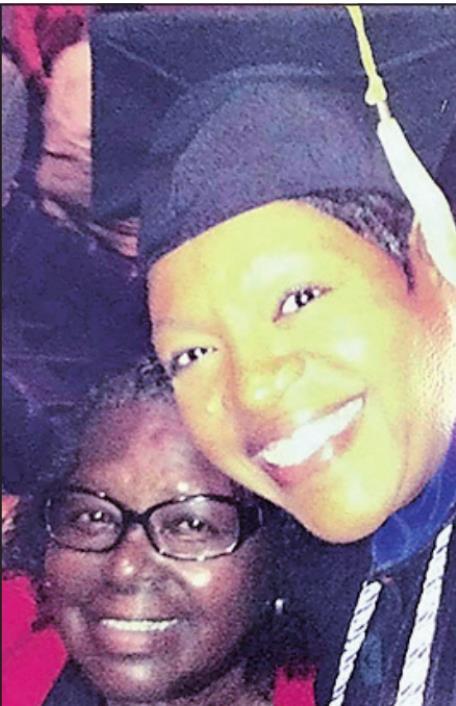
My dear friend, Dr. Tommye (Cashaw) Austin, a 1982 graduate from RHS spent nine years caring for her beloved mother Mae Joyce Cashaw (2017) along with her loving husband Fermon Austin (2019). She also attempted to get the best care for both her husband Fermon and her father Tommy (2019), prior to their deaths. Dr. Austin, featured in the 2020 Black History Series, is the daughter of the late Mae Joyce Jackson Cashaw and Tommy Cashaw Sr. She is currently the Senior Vice President and Chief Nursing Executive at University Health System in San Antonio, Texas. A position coveted by many and rarely held by an African American female. As the chairperson for the 2019 and 2020 American Heart Association’s Go Red for women signature initiative, and family caregiver, Dr. Austin took her own health into consideration after the death of her family members. Since that time, she has been on a quest to educate others about the importance of nutrition, exercise, good mental health, and self-care. With numerous accolades for her innovative work in nursing care, Dr. Austin is a constant caregiver and encourager of others in her charge. When asked what she would impart to others who are facing the challenge of providing care for ill family members, Dr. Austin said “ Your family member is always your responsibility no matter what anyone tells you. As your family member’s advocate, stay relentless to ensure that they receive excellent patient care.”
Balancing a challenging position, philanthropy and public demands, Dr. Austin managed to ensure the care of her family members and excel to be named as one of the 50 Most Influential Clinical Executives by Modern Healthcare. Her own mother, Mae Joyce, was a Licensed Vocational Nurse (LVN), and home health practitioner during Dr. Austin’s formative years. Sometimes overlooked, this essential function requires patience, a heart for caregiving, and a generous spirit to comfort and care for those who are no longer able to attend to their basic needs. Tommye’s mother exuded all of these characteristics.
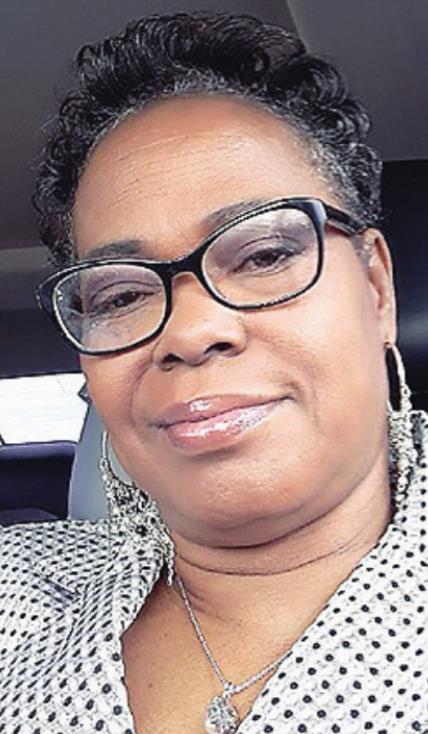
Frances Wilcox Miles, a 1981 RHS graduate and LVN, is currently a home health worker and nursing home worker in Calvert and LaGrange. She is the daughter of Everline McBride and Roosevelt Anderson and graduated from Temple College nursing school in 1994 and was licensed in 1995. When asked about the most important challenges facing health care from her viewpoint, Frances said that home health requires providers to be attentive in assessing patients, ensuring that they receive appropriate care during visits. Identifying any health situations that may require intervention is key. In nursing homes, the environment is unstable due to rapidly evolving patients. Good time management and compassion is critical. All patients are not the same. Communication styles change based on the needs of patients. For example, if short-term memory is not on par, you have to communicate with the patients on their level while not being condescending. Frances was also a full-time caregiver for her Mom. Because she also worked full-time, she paid an assistant out of pocket for two years to supplement times that she could not be present. In addition, she assisted her stepmother with the care of her father, sharing responsibilities for cancer treatments. The most challenging part of her job was being a family caregiver while working professionally. Frances says that shortage of staff is also a major challenge.
Adults ages 45 to 64 are the most likely to be caregivers. There are approximately 34.2 million caregivers according to the National Alliance for Caregiving and AARP, who have provided unpaid care to an adult aged 50 or older. Approximately 65% of care recipients are female and about 75% of the care givers are female. Younger adults requiring care are typically male. This is often an area where families struggle due to lack of preparation, funds or support. Witnessing and participating in the long-term care of family members and friends, as well as watching others struggle to provide adequate care, I recognize that this can be overwhelming and create health challenges for caregivers. One friend spent 15 years caring for his spouse’s mother and another 6 months providing the care for the father. Yet another family member cared for his mother for over two years with minimal support. People in this position are often rare gems and need support to sustain themselves through long-term situations. Frequently caregivers lack the appropriate amount of rest, self-preservation, and time for self-care.
Many families lack the funds to pay a full-time caregiver. The average salary of an in-home caregiver is $25- 30 per hour. Nursing facilities in the state of Texas can range from $4-6K per month. Often facilities have high patient to staff ratios, which can result in care deficiencies. The need for additional solutions, longterm care insurance and pre-planning in families is apparent. Improper care of patients can result in injuries, bed sores, additional disease progression, malnutrition or dehydration, and untimely deaths. The shortage of trained caregivers contributes to the lack of available quality care as well as the increasing cost of long-term care.
Along with the long-term care needs of the general public, the care of black men is critical. The Black Men’s Health project was created to call attention to the health crisis confronting black men in America. The lack of specific care, the unwillingness of men in general to address health challenges, refusal to seek care, and the propensity to neglect critical screenings such as prostate, colonoscopies, blood work, and even breast screenings, often contribute to late diagnoses and early deaths of men.
Early health challenges can increase the incidence of men requiring caregivers at an early age. Heart disease, cancer, high blood pressure, and cholesterol concerns often plague men of color. Mental health issues may often be left untreated as well due to stigma’s associated with seeking help. Often, early deaths leave females widowed before the age of 60. The lack of health data from scientific studies often, due to mistrust of the medical community, prevents the development of appropriate treatment protocols specific to men of color.
A 2019 research article entitled “Life-course financial strain and health in African Americans revealed how exposure to financial strain across one’s life contributed significantly to depression, cognitive disability in adult African Americans. To join the conversation on black men’s health, follow #RiseUpBrothers on social media or join @BMHealthProject.
On last week, the Black Men’s Health Clinic was opened in Austin. This initiative is the first of its kind in the Austin area and is intended to address long-time healthcare gaps for men of color. It is supported by the Austin NAACP, Austin Black Physician’s Association, Travis County,and Black Leaders Collective. Black and brown men are far more likely than their counterparts to die prematurely of heart disease, stroke, cancer, and diabetes. The BMHC Clinic is intended to change the way health providers engage with men of color and how data collection is utilized as a public health agent of change among various organizations. A number of partners provide services including UT School of Nursing, Dell Medical School Population Health Department, TXCROSS, American Heart Association, Sickle Cell Association, Austin Public Health, Austin Health Commons and the Alliance for African American Health in Central Texas.
Finally, according to Dr. Tommye Austin, “we conduct financial health checkups to identify deficiencies, we should also do personal health check-ups”. Take regular steps to identify the state of our health through regular blood work and screenings. Identifying changes early can save lives. As we wrap up Black Health and Wellness for the 2022 series, we encourage all people to take your health into your own hands. A single topic does not close the chapter on the actions needed. Good nutrition, adequate hydration, regular assessments of physical capabilities and conditions, strong mental health, and crucial conversations about future plans can not only save your life; but also those of potential caregivers. Examine the validity of long-held beliefs and conduct proper research. Many conditions are now treatable and there are alternatives available to improve life-spans. Your health and wellness is in your hands. Take charge of your final chapters.
- Log in or Subscribe to post comments.