

2019 BLACK HISTORY SERIES, PART ONE
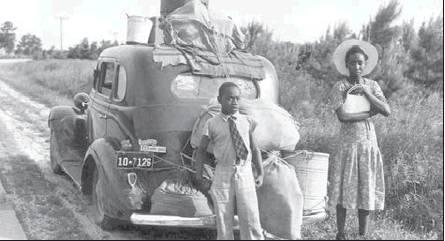
The 2019 theme for the traditional black History month (February) is black Migration.
This involved black family or individual movements from the deep south to the east or west of the United States to escape traditional farm life and hardships.
They were seeking, generally speaking, civil rights, desirable politics, positive cultural life and better work positions.
There was not a lot of movement in the Central Texas area, for many blacks owned farms, while others depended on farm work in the Central Texas area.
Many of these farms were located in the Sharp, Tracy, Gause and Thorndale areas.
A popular work area was the Batte farm in the Sharp/ Tracy Area Each crop harvesting season, the Batte truck could be heard in the Flat (part of Rockdale) and other areas, blowing the horns to gather the workers to chop or pick cotton.
This involved the spring months of April and May, and the late summer months of August and September. This group of workers then returned to the Central Texas area, to ready themselves for “down south” gathering of crops.
This group, transported by the late Artis Lovelady’s truck, migrated to the south within the Corpus Christi area.
Two varieties of crop were gathered This was a popular watermelon harvesting area, as well as a cotton harvesting area.
During these months, families could be observed gathering outdoor cook vessels, quilts for pallets and other needed items.
This group usually worked until the last of August before returning to Central Texas area to pick cotton.
Cotton-picking time usually lasted until early October
Meanwhile school started in September. This did not really matter to some families, for what money they were able to acquire during those months, had to last during the winter months.
So once again, families packed their needed items, and boarded the transport truck to West Texas near the San Angelo area to once again pick cotton.
This period sometimes lasted until November, and many times school age children were not able to begin school until November.
Another type of migration occurred as West Texas in the Midland-Odessa area became popular with oil production.
Several families made this area their permanent homes, and became productive in café life, beauty works, and oil-field works.
Automobile works also became another option for blacks in the south, however, few Central Texans moved to the Michigan-Illinois area.
The last type of migration from the Milam county area involved education. Many teachers migrated to California for a bigger paycheck and more viable education opportunities.
Most remained until retirement years. Popular Central Texas musician Pee Wee Crayton could be considered as one of the popular migrants to California.
With the coming of Alcoa to the area, most of the migration ceased.
Social life became more visible, as well as greater opportunities for a decent way of life for blacks.
- Log in or Subscribe to post comments.