


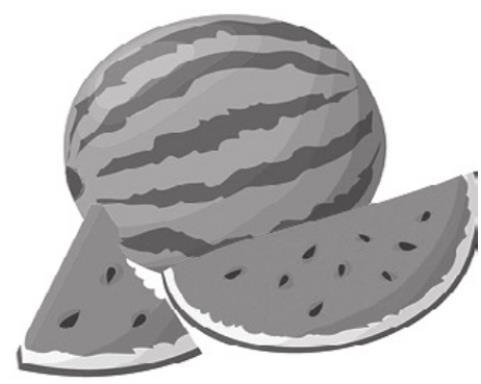
Thumping. Shaking. Lifting. You have probably seen people using these methods to select a watermelon, but do they really work? Following the steps below will help you choose a melon that is perfect.
Use your eyes—Look the melon over before you select it. The melon should be firm and symmetrical. It should also be free from dents, bruises, or cuts.
Turn it over—The main indicator of ripeness is found on the underside of the melon. The underside of the melon should have a creamy yellow spot. This indicates it has ripened in the field.
Use your muscles— Lift the melon up. A great melon is heavy for its size. Avoid melons which are lightweight if they are larger varieties.
Know your melons—There are over 1,200 varieties of watermelons grown in 96 countries.
The most common types are:
• Seeded: The seeded watermelon is the most traditional watermelon and can weigh between 10 to 25 pounds.
• Seedless: Seedless watermelons are the result of hybridization.
Some claim they have white seeds, but these “seeds” are really empty seed coats and are safe to eat.
• Personal: These tiny favorites usually weight 1 to 7 pounds and are perfect for those who don’t want to share.
• Yellow and orange meat: Most watermelons have red meat; however, there are yellow and orange meat varieties which are usually sweeter than the red. —mh—
Try this great fun, refreshing recipe with watermelon.
Aguas Frescas Watermelon and Lime
(Makes 8 servings)
5 cups seedless watermelon cubed
3 cups water divided
5-6 mint leaves
1 lime sliced for garnish
1 cup Ice
Combine watermelon, 1 cup of water, and mint leaves into a blender until liquefied.
Pour the watermelon mixture into a 2 quart pitcher, add 2 cups of water and ice, stir together.
Garnish the drink with thinly sliced lime rings and enjoy.
Serve or store in refrigerator up to 2 days.
Tip: Use a strainer when pouring the liquefied watermelon into the 2 quart pitcher for a thinner consistency.
- Log in or Subscribe to post comments.