

2020 BLACK HISTORY SERIES: PART I
Editor’s note: Susie Sansom Piper, who died last October at age 98, authored Black History Series for The Reporter over a 42-year period. This year’s series is being written by her granddaughter, Tamara Powell.
February 2020 marks the dawn of a new decade and a life of “new normal” for me.
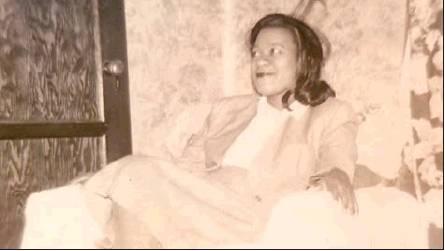
On Oct 21st, 2019, I lost my heartbeat, my encourager, my mentor, my mother.
My grandmother Susie E. Sansom-Piper raised my brother Jerome and I after our mother died in a tragic car accident. Although she left this earthly home, she left me with a lifetime of love, lessons, and history for which I will forever be grateful.
For 42 years, my grandmother, Susie E. Sansom Piper provided historical information and writings to The Rockdale Reporter during the month of February. I am grateful to The Reporter for their friendship and willingness to publish her many stories that were true yet, not always favorable regarding the treatment of African American citizens in her lifetime.
‘TELL THE TRUTH’—
My grandmother—Jerome and I called her “Mama”— always sought to tell the truth and also focus of the positive attributes of African Americans from Milam county.
‘ She told stories of triumph over tragedy, accomplishment over adversity, and perseverance over pettiness. For many years, she spent her time writing about the great accomplishments of many of her former students and her love for the Rockdale community.
This year, I will focus on not only the Black History month theme, but also honor the life and legacy of my mom.
This year’s theme for Black History month is “African Americans and the Vote”. This year, 2020, marks the 150th anniversary of the Fifteenth Amendment (1870) which gave the right of black men to vote following the Civil War.
African Americans have always overcome challenges to realize the same civil liberties of other Americans.
After the end of slavery, although the Fifteenth Amendment gave the right of black men to vote, it was common knowledge that this excluded blacks. States were slow to implement the right to vote until Lyndon Baines Johnson signed the Voting Rights Act into law in August 1965.
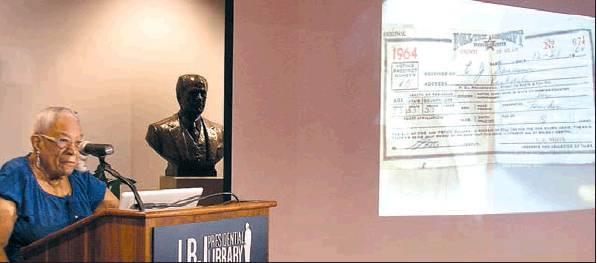
The bill had immediate results. At the time, a poll tax was required in three states (Texas, Alabama, and Virginia). When they did vote, there was a tax of $1.75 that had to be paid.
In those days, according to my grandmother, $1.75 to vote was a sacrifice that could be enough to feed a family for several days.
That money was often hard to come by. Considering my grandparents cut or styled hair for 25 cents a head on the weekends, to make extra money. Five times that amount to vote was a lot.
In some cases, employers would pay the tax for black voters and dictate for whom they should vote.
‘PART OF THE JOB’—
As school teachers, my grandparents were required to vote.
They viewed it as part of their civic duty; but it was also required as part of their job. In this situation, the vote was also “encouraged or preferred” for specific candidates.
They did, however, once in the voting booth cast ballots for their candidate of choice. In August 2015, I accompanied Mama to the Alamo Draft House dinner movie theatre in Austin.
We were there to attend the premier of the movie “Suffragette,” with Meryl Streep. “Suffragette” was a graphic depiction of the suffrage movement in early 20th century Britain, where political activists fight for equality and women’s’ right to vote.
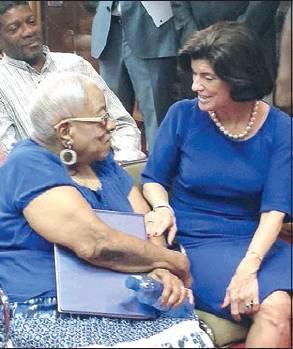
After the movie, at 93 years old, Mama sat on a distinguished panel to discuss voting rights with the League of Women Voters.
I marveled as the audience sat mesmerized at her sharing of the pride she felt in voting and the challenges African Americans and women overcame to have a right to vote.
She encouraged the young women in the audience to be dedicated, not become complacent in the privileges we have today.
She also talked about her days of registering others to vote.
LBJ LIBRARY—That August, she stood before a large crowd at the LBJ Library sharing her remembrances of the signing of the Voting Rights Act into law 50 years earlier.
Mama used these and other opportunities to educate others, encourage younger people, and continue to exhibit her demeanor of strength and dignity throughout her life.
This is a constant example for me to follow. Sharing stories of her life, I believe, will be a legacy that will last for generations to come.
Our ancestors overcame many obstacles to have the right to exercise the liberties of all Americans.
We sometimes become complacent and entitled. Failing to maintain the air of dignity and strength that was passed down.
I offer this as encouragement and a reminder for us all. We have a responsibility to live up to the legacy our ancestors secured, and to pass on the same sense of pride and respect to the future generations.
- Log in or Subscribe to post comments.