

Black history has always been a story of triumph over tragedy, perseverance in the face of adversity and a constant search for equality.
Every race has idiosyncrasies and expectations of their own community that are unspoken yet inherently understood. As a young child and as an adult there are secrets and quiet tittering that the community knows, but rarely steps in to address. We live in our own safe bubbles and step outside in our Christian cloaks to share on the fringes, but often only if it is comfortable. One of those such secrets is the state of mental health. Mental health needs are not often talked about in the Black community and many other communities as well. As a result, people suffer in silence and create generational impact that is often, if ever, not addressed.
According to Mental Health Matters, Black or African Americans, Hispanic or Latino and Asians have the lowest percentages of annual rates of treatment in the U.S. (37 percent, 35 percent, and 21 percent respectively) as compared to 58 percent for Whites. In addition, the average delay between onset of mental illness symptoms and treatment is an average of 11 years.
Focusing on the mind, body, and spirit is important for the overall health and wellness of everyone. Particularly in the Black community where cardiovascular disease, diabetes and high blood pressure are prevalent, it is important to note that people with depression have a 40 percent higher chance of developing heart disease than other populations. People with mental illness are more than twice as likely to develop comorbidities or other diseases.
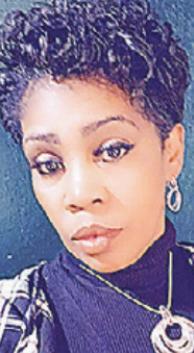
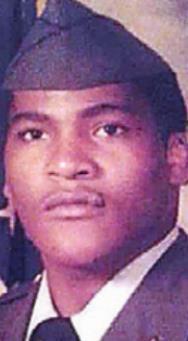
Angelena and Dylan Glenn Alcorn were raised in the Rockdale community predominantly by their grandmother, Earlene Benford. Angelena was the youngest girl of seven children born to Ms. Johnnie Ruth Alcorn. Dylan Glenn, often called Pooh Bear, was a couple of years older than his sister. They had two additional living sisters and brothers from their mother. Each child had a different father per Angelena. As a young child, growing up in the community with these two siblings, I often witnessed incidents between their mother and others in the community, primarily because of where my great grandmother’s house sat and the frequency with which her relatives came over to be patched up. Everyone knew Ms. Johnnie Ruth. She often stumbled along the street to Ruby’s Café, which sat in the middle of the “flat” and then up the hill to the second beer joint that perched on the hill where Sho-Nuff now stands. It was not an unusual sight to see or hear arguing or fighting somewhere near the café. Blood spilled, black eyes and busted lips.
Although we often like to think of Black History Month as a way to elevate the history that is often downplayed in textbooks, ordinary citizens overcome extraordinary circumstances to contribute to society without the fame or notoriety of those more well known.
It is this history that is important to highlight the need for treating mental health conditions for overall health and establishing appropriate avenues for care in communities where needed. For people in the Black community, appearance and stigmas placed on differences may prevent people from getting the professional help they need. Spiritual beliefs and ritualistic attitudes may lead people to believe conditions can be controlled by sheer will or prayer only. This is not to discount the power of either, but simply to state that we are given professionals to help in areas where our willingness to change is just not enough
In talking with Angelena I learned much about their background. The events we did not see in the streets or on the corners and the horror experienced by children in a household with another plagued by mental health issues and alcoholism. I also had the opportunity to talk with her brother Dylan prior to his death from cardiovascular disease and stroke at age 57.
I asked Angelena when she first knew something was wrong. She indicated that she first knew her family was dysfunctional when she was around five years old.
“I remember when I first went to school. My Mama dressed me in a little blue dress and blue patent leather shoes and took me down the street. She said ‘Baby, go.’ I didn’t know where the school was or what I was supposed to do, but I eventually found it,” she shared.
School was never important. According to Angelena, no one taught her to spell her name or anything. One day as she sat in the café waiting for her mother, a cartoon came on the television and in the credits, it said “Angie.” She ran home as fast as she could, reciting the letters, writing them down. She got the N upside down and the G backwards but learned to spell her name. It wasn’t until she was 11 that she realized her full name was Angelena and that it was spelled differently on her birth certificate. At that moment, she changed the spelling of her name to add an ‘e’, but no one ever noticed. In fact, Angie recounted that no one cared about report cards or even if they went to school. Everything that she and her siblings learned was from school or on their own. They could have stayed out forever and no one would know. Life was miserable.
She told me how she and her siblings were constantly forced daily to fend for themselves. Hustling for food or clothes, getting themselves to school or sporting events, and lying awake nightly unsure if it was the night for another beating. They had to make money however they could and get home before dark. Angelena’s childhood and adulthood was filled with things children should never experience. Getting government assistance, she made sure to get up at 6 a.m. to go to the post office with their mother on the first of the month so that they could get money for food. If not, the money would be gone by the next day. “I am sure that Mama’s friends were stealing her money while she was passed out drunk,” she said. Both Angie and her brothers made it through school and graduated. Dylan went off to the army soon after graduation, but family habits followed him there and home. An excellent painter, draftsman and handyman, he often did odd jobs to make ends meet after he returned from service.
When talking about mental health in the Black community, I asked Angie what she thought was key. She recognized in her thirties that there was a problem behind her family problems. “We had a dysfunctional home and relationships. We were not allowed to express our feelings and were constantly on pins and needles. We had to buy three to four new brooms each week because Mama would beat us until they broke, often hitting us with anything she could find. A lot of times, we would be sound asleep and she would come in and beat us. Discipline was terrible and there never had to be a reason. Everyday there was anger and fighting in the house.” This reminded me of a story Dylan once told me about their mother hitting him with a hot iron and then cutting him with a knife. They learned to cope with whatever happened, burying pain in the two- bedroom shotgun house where the doors stayed open all the time. Angie said that between her mother and father, she has 24 brothers and sisters and is the baby girl on both sides. She learned to fight and defend herself against predators that sought her out knowing that she had no protection at home. There was no such thing as supervision. Her oldest nephew would walk all over town at 13 months old. Once, she said, he didn’t know his way home so he went under the house and cut his knee.
Now, the mother of three children, including the NFL Philadelphia Eagles offensive lineman, Le’Raven Clark. “I didn’t know who my father was until I was pregnant with Le’Raven. That was the first time she (Mama) came in with a bible. She told me that I was pregnant by my brother because my father was supposedly a Clark and that I was going to have an incest baby. The next day, she came back with a bible in her hand and a piece of paper with all names, birthdays and fathers’ names of my siblings and I. I was 27 years old and found out that Ned Richards was my daddy.” Angie said that at 27 years old, 100 pounds of weight came off of her shoulders at that very moment.
Mentally, Angie and her siblings were affected by a lot of stuff. They didn’t share emotions or stories. Their only defense mechanism was to fight or drink. They lived in a dominant-submissive household. No one cared for anyone else’s feelings. There was constant fighting and abuse.
Today, Angie says, it is still difficult. Whenever the siblings get together, there is always an argument about the past. She says that as the baby, she had to take on everyone else’s problems and had adult responsibilities. “My baby brother still can’t have a conversation. We took on roles that children should not be concerned with. We were not allowed to be normal kids. We all suffered from various mental health disorders from our upbringing like ADHD, ADD, schizophrenia, post traumatic stress disorder, bipolar disorders, manic depression, anxiety and depressive disorders. We never knew what we were going to eat or if we would live to see the next day!” Both Dylan and Angie were good in sports, but no one ever came to watch or support. After a while it was too embarrassing for their Mom to show up as she was consistently intoxicated. There were never any dads in the house. They learned to deal with challenges on their own and cope the best way that they could.
Angie feels no one ever talked about mental health. Everything was suppressed and people lived in a constant state of denial. Most simply saw her family as dysfunctional drunks and looked down on them or saw them as less than. Now, she seeks to help others struggling with substance abuse and mental health disorders while continuing to peel back the layers that destroyed many lives in her own family. Angelena knows that her family and many others suffer in silence and never seek treatment. She indicates that many never recognize that the kids would grow up with the same challenges.
Ms. Johnnie Ruth was a straight A student in Aycock High school, and according to my own grandmother, very beautiful. Angie says her mother wanted to be a nurse at one time but her first pregnancy and a series of bad relationships led to her constant drinking and decline into a perpetual state of alcoholism and rage. Later, as drugs became more prevalent, some family members turned to them as well. It was always sex, drugs and fighting. Angelena admits that she has struggled herself, delving into the underworld in a quest to understand what happened in her own family and fighting the demon spirits that threatened to destroy another generation. She admits that it is hard to form family relationships and that she tried to shelter her own children from the pains she lived.
Six kids. All different fathers. “We have one thing in common, mental health issues.”
Angie has learned that there is always a problem behind what you are doing. Many are just not getting help. Many times there are multiple diagnoses and substance abuse becomes a coping mechanism.
According to the American Psychiatric Association, only one-in-three Blacks who need mental health care receive it. Negative attitudes and beliefs towards people who live with mental health conditions are pervasive in the U.S. Those attitudes can be very strong in the Black community. One study showed that 63% of Black people believe that mental health conditions are a sign of weakness.
Angelena says that while attending church she was glancing out the window one day, watching her people go round and round. She found herself asking God, what she could do to help her people. She asked him to use her and said that if she went back into it, she wanted to learn something from the experience. Angie says that God told her she could never handle the Devil on her own. So, she asked him to come along beside her and he did.
As she continued her 15-year journey, God allowed her to go into many households, hearts and minds of others. In church, she asked God to show her what was wrong with her people. She was inspired by another true story that she read and she knew she was destined to come back and tell her story. Even though it may sound far fetched, Angie says she would not change her journey for anything now, except for more protection for her children from the dysfunction. She says that you can ask God anything, as long as you keep your promise. She is keeping her head up these days and moving forward in her quest to help others. “Sometimes when I tell my story, people think I am crazy,” Angie said.
Today, Angelena Alcorn has an AA degree as a Mental Health Substance Abuse Counselor and is working on a second degree for Mental Health Social Work at Tarrant County College. Like her mother at one time, Angie is an excellent student. Left untreated, mental illness can impact how children live and cope for the rest of their lives. “If something is going on with you or in your household, your children are going through it too,” she said. When asked what she would tell others about dealing with mental illness, Angelena had a list of recommendations.
• Recognize symptoms early
• Everything goes back to childhood as far back as you can remember. Don’t ignore it.
• Help children reach their full potential
• Recognize changes in children: Poor grades, lack of concentration, anxiety, insomnia, hyper-activity, hyper-sexuality, aggressiveness, withdrawal, depression.
Angelena is full of the stories about her life. She has seen and lived through it all. With the prevalence of crack and other substances, women and men of all races sell themselves for momentary highs. Many of these addicts have untreated mental health issues. Nonetheless, for the health and wellness of all communities, the covers must come off. Burying our challenges or simply looking the other way perpetuates the pain through generations. While the Black community is not any more or less likely to suffer from mental health disorders, they are much less likely to have access to quality care. Some may live in socioeconomic conditions or poverty, contributing to mistrust of professionals with less than four percent of psychologists who are physicians of color.
Angelena’s is truly a story of triumph in the face of adversity. Although not perfect, because none of us are. Angelena only hopes that in sharing a very small part of her own story, people will seek help and intervene within their communities to protect children and families. Per Angelena, “Don’t brush it under the table. You can overcome. There is help.”
Today, she is on God’s mission, constantly fighting the battle to help others and stay straight.
Resources: National Suicide Prevention Lifeline: 800273-8255, Veterans Crises Line 800-273-8255 option 1, National Alliance on Mental Illness (NAMI Helpline- 800-950- NAMI), Substance Abuse and Mental Health Services Administration SAMHSA 1-800-662-HELP, Mental Health America, Liberate Meditation App- meditation app on Android and IPhone, Very Well Mind, Therapy for Black Girls is an online space to encourage mental wellness of lack women and girls, Therapy in Color and the Boris Lawrence Henson Foundation.
- Log in or Subscribe to post comments.