

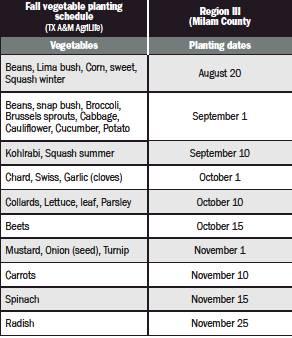
Most gardeners plant their vegetables in the spring to harvest in late spring to early summer. In most areas of Texas, it is possible to have a fall vegetable garden also, but it will need to be managed somewhat differently than a spring garden.
If your spring garden was successful, the same location should work well in the fall. When planning a new garden, keep in mind that vegetable crops must have at least eight hours of direct sun each day and should be planted where the soil drains well.
If you’re using an established garden area, pull out all plant material—the remains of your spring crop and any weeds that have grown up in the garden. Don’t put plant residue from a spring garden into your compost bin because it is likely to be contaminated with insects and disease pathogens.
For a new garden site, remove all the grass. Just tilling it into the soil will not eliminate all the grass sprigs; they will continue to grow and interfere with the garden. Likewise, for a raised garden, remove all turf before building the frame and filling it with soil.
Grass and weeds can be killed with an herbicide that contains glyphosate. Several products are available, including Roundup and Kleenup.
After removing the grass, shovel the garden area to a depth of 10 to 12 inches. Rototillers will not penetrate adequately, but they can be used to loosen and mix shoveled areas.
Spread one to two inches of coarse, washed sand and two to three inches of organic matter on the garden surface and till it into the soil to improve the soil’s physical quality. The soil will need to be improved over time rather than in just a season or two. If you are building a raised bed garden, don’t skimp on the soil. Use weed-free loam or sandy loam soil.
Adding fertilizer is the next step. You have two options: Apply one pound of ammonium sulfate (21-0-0) per 100 square feet (10 feet by 10 feet) before planting. Then sprinkle one tablespoon of ammonium sulfate around each plant every three weeks and water it in.
Or, apply 2 to 3 pounds of a slow-release fertilizer (19-5-9, 21-7-14, or 25-5-10) per 100 square feet of garden area. Apply one tablespoon of ammonium sulfate (21-0-0) around each plant every three weeks and water it in. This second method should produce a more abundant harvest, especially with hybrid tomatoes and peppers.
Horse or cattle manure may be substituted for commercial fertilizer at a rate of 60 to 80 pounds per 100 square feet of garden area. Never use poultry manure on a fall garden.
After adding fertilizer, mix the soil and prepare beds on which to plant rows of vegetables. These beds should be 30 to 36 inches apart so you can move easily through the garden area when the plants grow larger. Pile and firm the planting beds.
Then water the entire garden with a sprinkler for at least two hours. Allow the area to dry for several days, and it will be ready to plant.
Larry Stein and Joe Masabni of Texas A&M AgriLife Extension service wrote this article.
- Log in or Subscribe to post comments.