

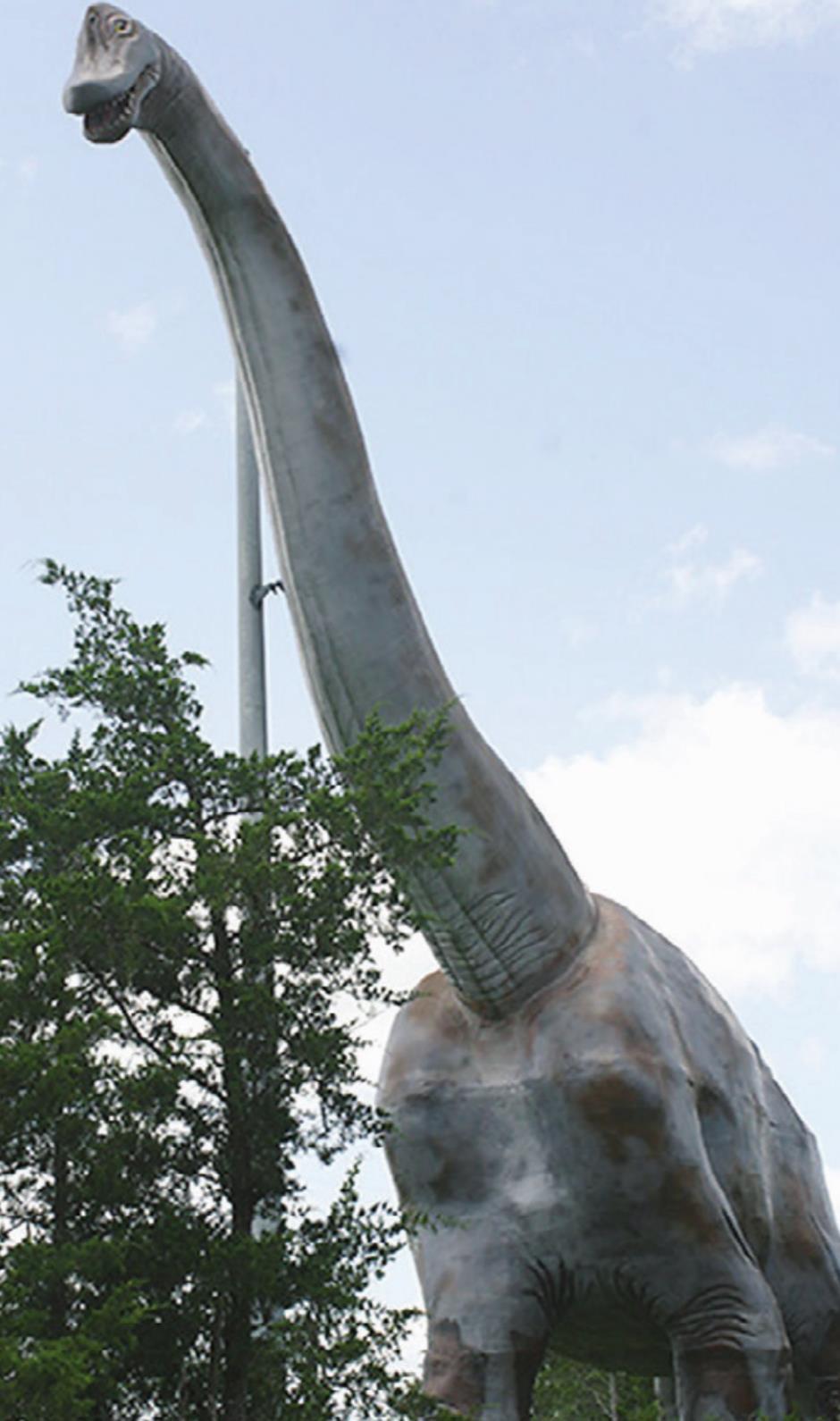
Have you ever wondered what you would do if while traipsing through the woods you suddenly spied a 123-foot long Diplodocus munching on leaves from low-hanging three branches or a 69-foot-tall Brachiosaurus eating from the top of the tree?
Well, a trip over to the Dinosaur Park between Austin and Bastrop off US 71 will give you a taste of what you might do when seeing those giant creatures—well lifesize replicas anyway—in a natural setting,
The park is filled with reproductions of dinosaurs and other creatures that lived long, long ago.
Wandering down the trail,visitors will see a velociraptor of “Jurassic Park” fame; a triceratops who could fight off a brutal Tyrannosaurus rex; and a kelenken, a monstrous meat-eating bird that would have called an ostrich shorty.
Around every twist and turn, there is one right after the other of long-extinct animals such as the dimetrodon, which was not a dinosaur, in fact, it was more closely related to mammals of today. It had a giant sail along its spine
Watch out for the Smilodon which was a big cat with long, knife-like canines, all the better to chomp with. They mostly roamed the plains of North and South America in search of other large mammals to prey on.
The well-known Tyrannosaurus rex is also on display in the woods of the park. It looks every bit as ferocious as it is depicted to be in movies such as the Jurassic Park series.
The long and tall dinosaurs are represented by the Diplodocus and the Brachiosaurus, the former growing up to 120 feet long and the latter standing on great round legs almost 100 feet high.
But not all dinosaurs reached gigantic sizes. Keep a sharp eye out for the Compsognathus which was a turkey-sized dinosaur that was as fast as the wind. While no one has ever clocked one, since they are extinct, scientist think they could run at speeds up to 40 mph in pursuit of game, like lizards.
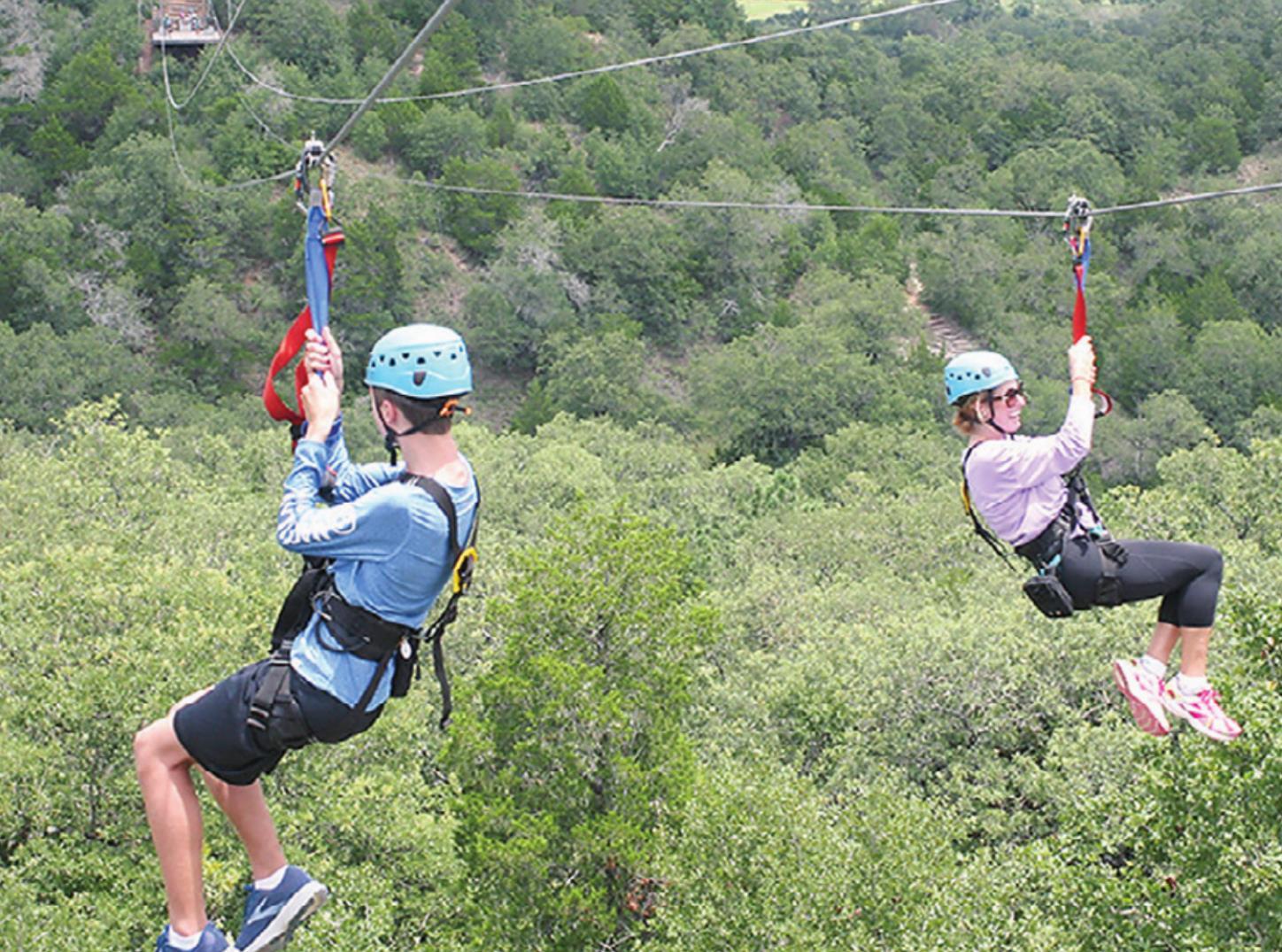
Speaking of speeding along, not far from the Dinosaur Park is Zip Lost Pines.
People can zip up to speeds of 40 mph along the lines at this recreation facility on the ground of McKinney Roughs Nature Park.
Lost Pines has six lines if one takes the full tour, but there is a half tour of three lines available.
The first line is called the Piney Plunge. It is sort of a bunny slope, to use a ski term. Piney is only 146 feet long and riders usually top out at 15 mph. It is to get riders accustomed to riding the longer and faster tour stops down the line.
Next up is the Cactus Corridor and the speed of this line really picks up from the fi r s t .
There is a spiral staircase leading up to the Cactus’ platform where riders embark on a trip of 672 feet and can hit a speed of 30 mph. Screaming is allowed.
Tour stop number three is Valley Vista and gives riders who keep their eyes open a grand view of the canyon.
It is 777 feet and riders zip along at 20 to 30 mph.
Loblolly Land is the next stop and at 1,074 feet it is the longest line encountered so far on the tour. It takes riders from one of the best lookout spots along the tour and leaves them deep in a forest of loblolly pines.
Then hitch up for the shorter Horseshoe Highway and there is a reason for that name. First all to get to the take-off spot one has to traverse a suspension bridge that features a big horseshoe gate. Then looking down from the bridge and the platform you will see that the land below is in the shape of a horseshoe. The ride for this stretch is 535 feet.
The final leg of the tour is the longest and potentially the fastest. It is the River Run and it is one quarter mile long and makes it hard for some to hold on to their breaths as they zip along at up to 40 mph.
It takes anywhere from two to three hours to complete the full tour of the lines. You can make reservations for one of the tours online at www.ziplostpines.com or you can book over the phone at 512-761-2323. Try to make the reservations at least 24 hours in advance of your planned visit to the facility.
There is more to do at McKinney Roughs, too.
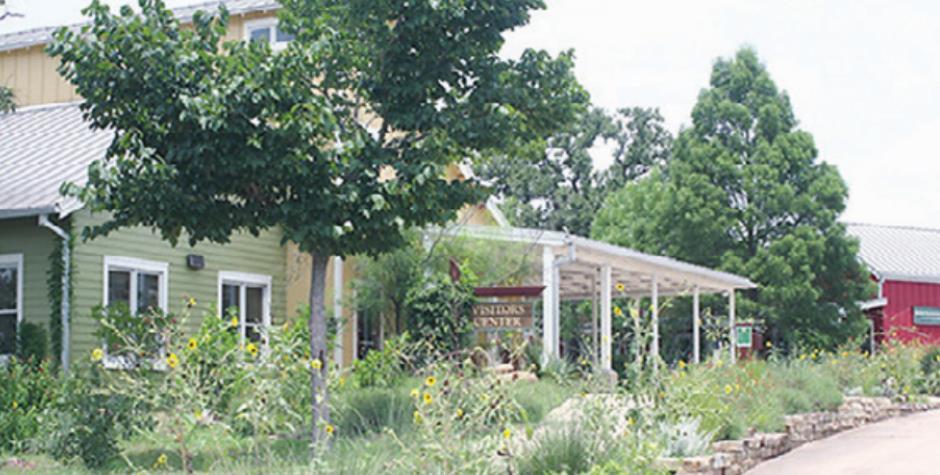
In the visitors center, people can learn about the 20 trails and spurs that were made for hiking around the property.
The trails vary in length from those less than half a mile to one almost three miles. A map is available so hikers can chose which route to take.
There are spots to stop and take in the view of the countryside or spot some birds chirping or flying about. There are also places to enjoy a picnic lunch for those who enjoy dining alfresco.
McKinney Roughs Nature Park is named after Thomas F. McKinney, who once had a saw mill on the property. Roughs come from the rugged terrain in the park, according to Clara Tuma, who is the public information officer of the Lower Colorado River Authority which owns and operates the nature park.
- Log in or Subscribe to post comments.