

There are more than 600 types of venomous snakes in the world, the United States has only four, and Texas has all of them.
The four venomous asps are rattlesnakes, copperheads, water moccasins and coral snakes, and all are plentiful in Rockdale.
Rattlesnakes, copperheads and water moccasins are all in the pit viper family. Pit vipers don’t lay eggs in the usual sense. Their eggs are more like sacks that the young snakes wiggle out of after birth.
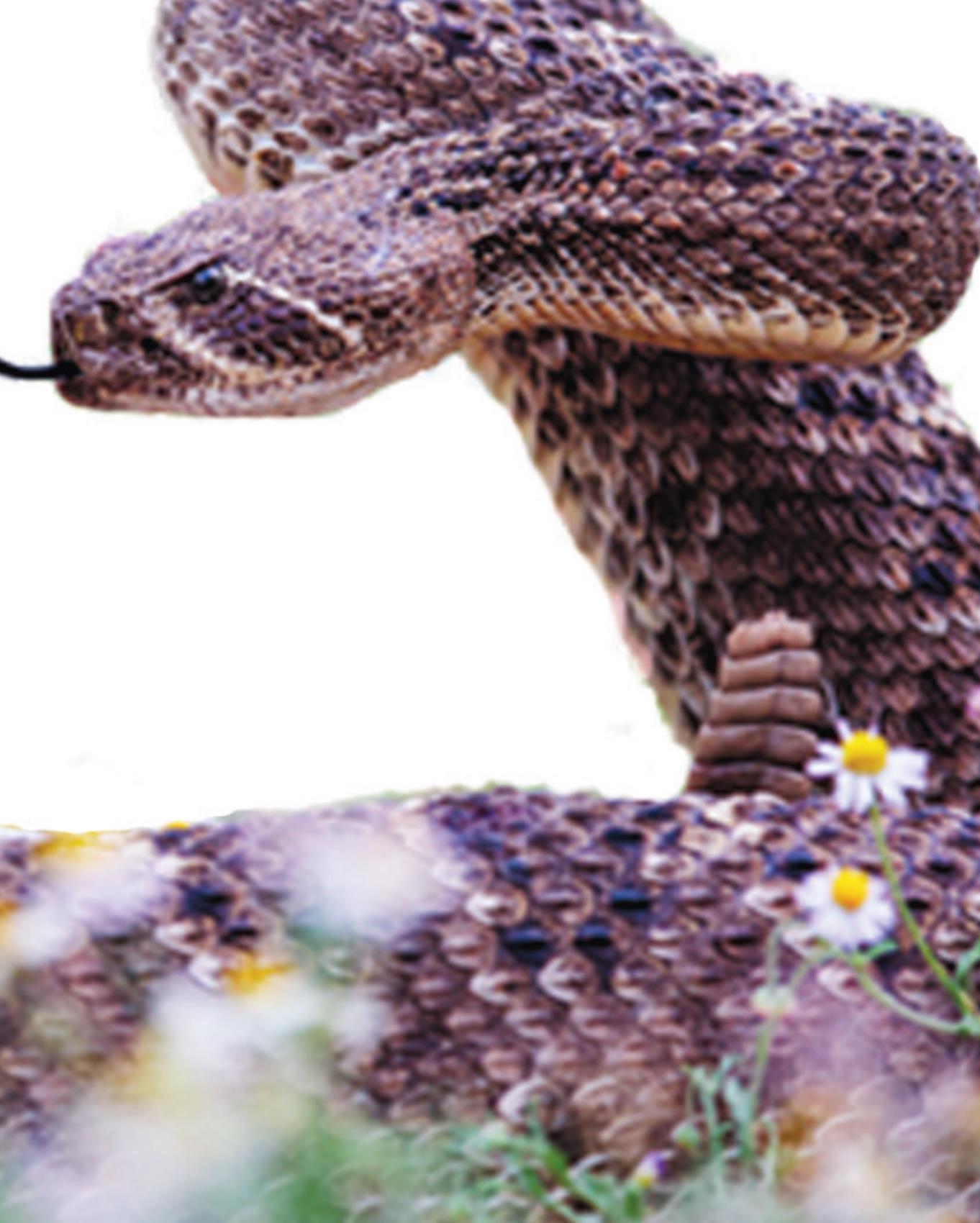
Rattlesnakes, the largest of the venomous vipers, come in 10 different varieties in Texas.
The most common in Rockdale is the Western Diamondback Rattlesnake (Crotalus atrox) which has brown, diamond-shaped markings on its back with alternating rings of black and white at the end of its tail right before the rattle. These snakes tend use their rattle when threatened.
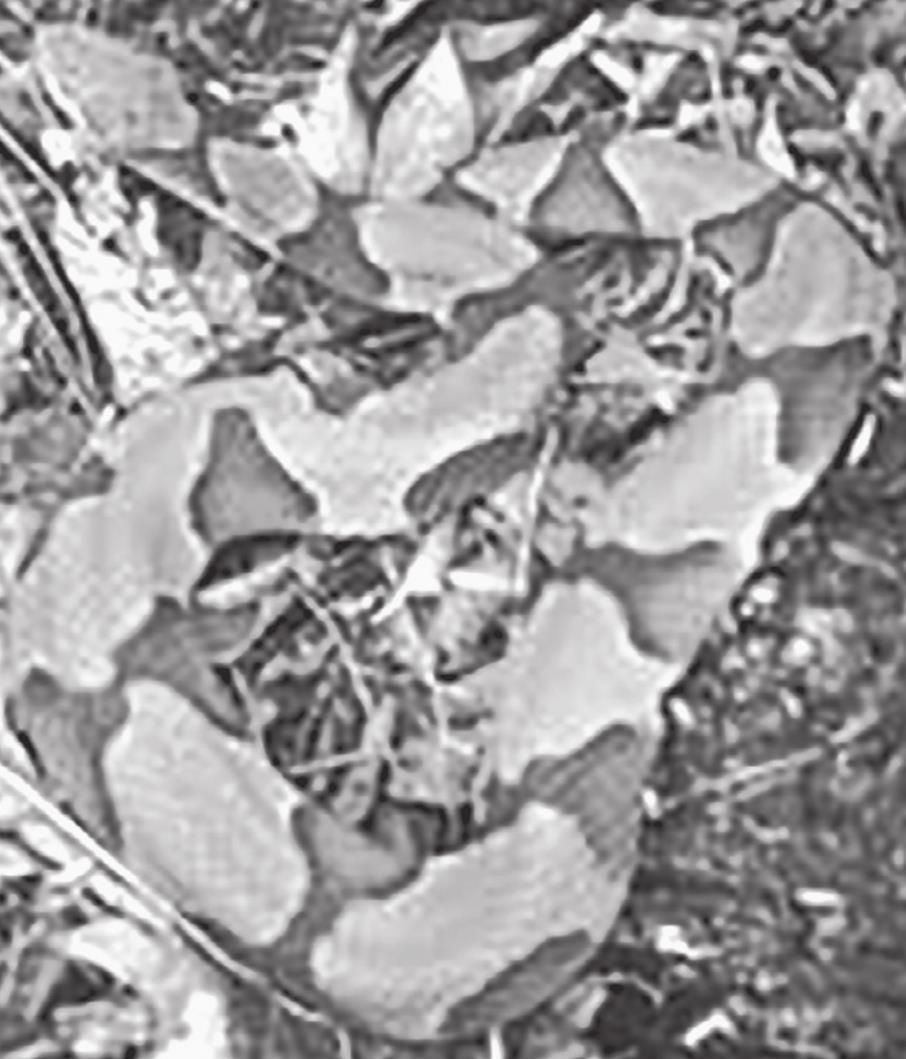
Copperheads come in three varieties in Texas, but the one common in Milam County is called the Broadbanded Copperhead. They are known for their distinctive reddish-brown bodies with a cross band pattern consisting of tan, copper and rich brown colors that extend throughout the body. The juveniles are much more gray than the adults and they have yellow tail tips until they are about three years old.
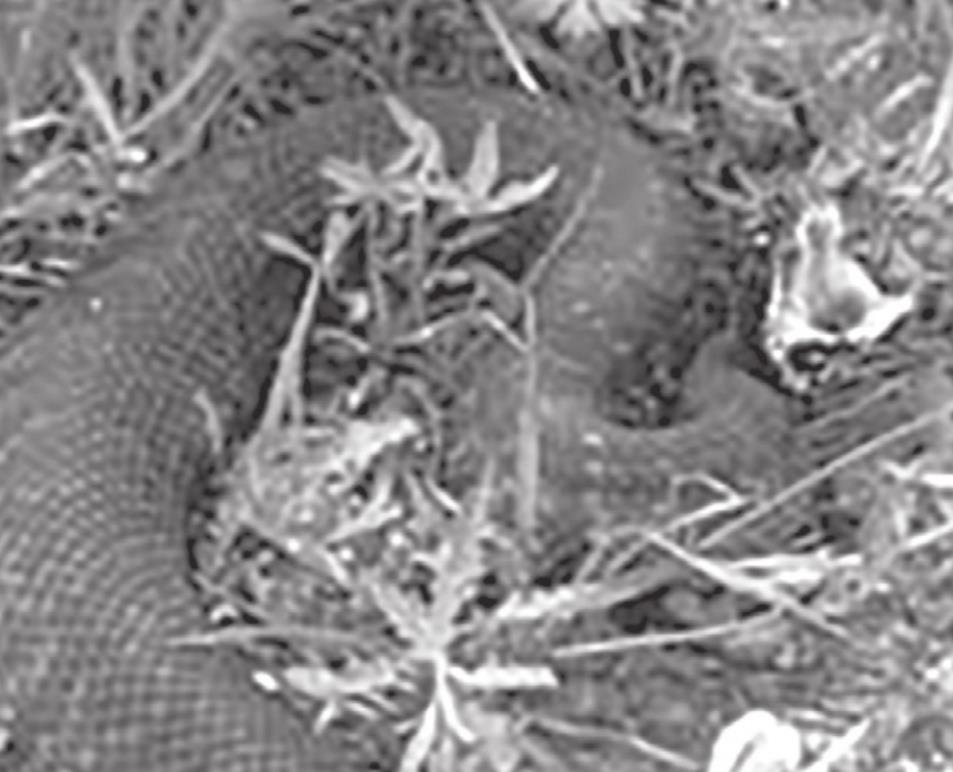
The water moccasin, also known as cottonmouth, can be found in marshes, swamps, ponds, lakes, ditches and canals in Central and East Texas and along the Gulf Coast.
They’re called cottonmouths because when they are frightened they tend to pop their mouths open, the inside of which is a bright white like cotton.
They are dark, grayish-brown with little or no markings. Very old cottonmouths may be entirely black. Juveniles are born August through October and are fully loaded with venom.
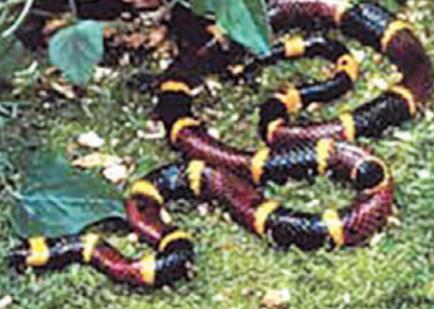
The only venomous snake in Texas that is brightly colored is the aptly named coral snake. The rhyme “red and yellow, kill a fellow; red and black, venom lack” was invented to help Texans differentiate them from non-venomous king, Texas scarlet and Mexican milk snakes that have similar colors.
Coral snakes are shy and non-aggressive, but they have the second most powerful venom of all snakes, with the black mamba being the first. They are in the same family as the cobras of India.
Coral snakes do lay eggs and once they hatch, the juveniles are about seven inches long and as fully venomous as an adult.
Complied by Kyle Cooke from the WHO, the CDC and Texas Parks & Wildlife. All photos courtesy of Texas Parks & Wildlife.
What to do in case of snake bite
• Keep victim calm.
• Keep the bitten arm or leg below heart level.
• Clean bite site with soap and water.
• Keep victim from walking, if possible.
• Remove tight-fitting clothes and any jewelry such as rings and watches, before the onset of swelling.
• Try to identify the species of venomous snake that inflicted the bite without endangering yourself.
• Call 9-1-1 and immediately transport to nearest medical facility.
• Keep in mind, anti-venom treatment is most effective within the first four hours after the bite and is ineffective after 8-10 hours.
- Log in or Subscribe to post comments.