

BLACK HISTORY MONTH
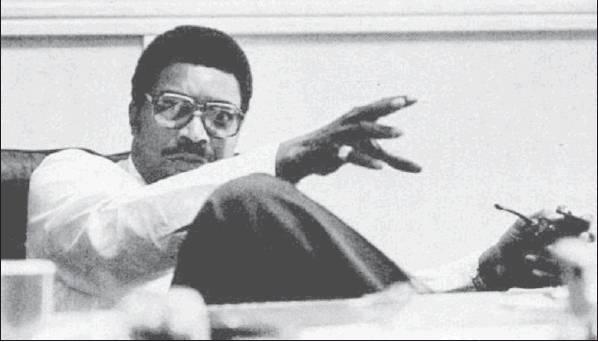
Many in Rockdale know Dr. Leroy Victor Swift as the former pastor of the Mount Tabor Baptist Church in Gause or as the kid from Two Mile Community whose father was saved in the 1913 flood by Rockdale resident Walter Seuss.
However, what many may not know is that Swift was the police officer in charge of helping to quell the Kansas City Race Riots of 1968 or that he guarded Martin Luther King, Count Basie, Ella Fitzgerald and other jazz greats when they visited Kansas City in the ’60s.
“My father is a hidden gem in Rockdale,” said Darrylyn Swift, the second youngest of four children in the Swift family. “A few weeks ago I was with a friend of mine who is big time in law enforcement and she mentioned she was a part of NOBLE (National Organization of Black Law Enforcement Executives) and I told her, ‘My father is one of the founders of NOBLE.’ She almost wrecked the car when she heard that.
“I love the reactions I get from people in law enforcement when I tell them that. It makes my heart sing,” she laughed from her home in Atlanta. “The agency is proactive and engaged in empowering black law enforcement officers.“
Swift blazed a path for Black officers in his 27-year career with the Kansas City Police Department with lessons in race relations, according to the Kansas City Times in 1985.
Riots
In April, 1968, Kansas City was one of 37 cities in the U.S. that broke out in riots after Martin Luther King, Jr. was assassinated.
Students in Kansas City marched in protest to the government failing to close schools across the city on the day of MLK’s funeral, which they viewed as a lack of respect for King, according to the Final Report Mayor’s Commission on Civil Disorder.
Missouri State Highway Patrol and National Guardsmen were called into the city after the mayor declared a state of emergency and an emergency curfew in the city. There were 2,000 rioters in the city, according to the report.
It was amid all this chaos that Swift was called in.
“My lieutenant told me, ‘I need you out in the plaza to take charge.’ I was in charge of the military they were sending in there, including the reserves,” said Swift, who was a Patrol Field Sergeant at the time.
As he tried to subdue the racial powder keg that exploded in his city, he also had to fight a separate racial battle on the front lines.
Swift said a grizzled old white National Guard sergeant showed up with his men as he was giving out assignments.
“The old sergeant sized me up and didn’t like what he saw and says, ‘By God, you can’t tell me what to do.’ I said ‘Okay, before I release you, I need to talk to your captain,’ ” Swift said.
As Swift waited in the plaza a Jeep driven by a captain drove up with a colonel in the passenger seat. Swift explained to the colonel that this sergeant did not care to go where he was assigned.
“I told him if he can’t do that then I’m going to have to make do with what I’ve got,” Swift laughed. “The Colonel calls his sergeant over and points to me and says, ‘He’s in charge of everything out here and you are under his command. Do you understand? If I have to come back, I’ll rip all those ___ damn stripes off your arm.’ And I never had another problem.”
Although his internal battle ended well, the looting, vandalism, arson and assaults resulted in six people killed, eight wounded, 13 National Guardsmen and firemen injured, 10 policemen injured, 16 citizens treated for tear gas, 312 buildings damaged, $915,000 in property damage, 98 arson fires between April 8-13 and 1,042 people arrested, according to the commissioned report.
Aftermath
Swift’s youngest daughter, Darrylyn, who was seven during the riots, doesn’t remember being afraid at the time.
“My parents did a good job about shielding us from what was going on and teaching us about race relations,” she said. “When MLK was killed it became a volatile time on an everyday basis. I do remember my mother being fearful. She could not sleep or do anything until my father came home.”
Pearl Dietrich Bedford Swift, who passed away in 1992, raised four children in Kansas City with Swift – Cheryl, Matthew, Darrylyn and Duane. Swift is now married to Margie Lanell Mack of Rockdale.
“Pearl, my mother, passed in 1992,” Darrylyn said. “She was a brilliant woman, active in the community, a supportive wife and good public speaker. Different organizations would ask her to speak.
“Between the two of the them, I thought, ‘Can one of you guys just be normal.’ It was intimidating to have them as parents,” she said. “Not the beat down kind, but they created in me a desire to be able to hone my skills and find my passion.”
Swift said because he was one of the few Black police officers on the force, whenever the civil rights leader Martin Luther King came to the area to speak he was assigned to guard him because of the large crowds King drew.
“Back then Martin Luther King needed a lot of protection,” Swift said. “They would take three or four black police officers out of uniform and put us in plain clothes. A lot of violence went on during this time.”
Swift recalled a National Baptist Convention where people were knocked off stage and police locked arms to protect King.
“We had to pick him up from hotels take him to his activities and take him back his hotel. The happiest times were when we had him out of town safely and we could get back to normal,” Swift laughed.
As part of the protection detail, Swift remembered the inspiring and Bible laced sermons and speeches King would give to audiences.
“I fell in love with some of his sermons,” Swift said. Swift also quotes many of those sermons he watched live when he preached and included them in his Bible Study workbooks.
Swift rose from sergeant to lieutenant colonel in nine years. He was the youngest colonel in the department.
TO BE CONTINUED
- Log in or Subscribe to post comments.